
Last updated November 26, 2026. Educational content only, not financial advice. Crypto prices can fall sharply and you can lose money.
Quick answer: What is Litecoin? Litecoin (LTC) is one of the oldest cryptocurrencies, created by Charlie Lee in October 2011 as a lighter, faster version of Bitcoin. It uses proof-of-work mining with the Scrypt algorithm, adds a block about every 2.5 minutes, has an 84 million coin limit and is mainly used for cheap, quick payments.
- Litecoin was launched in October 2011 by Charlie Lee, a former Google engineer, using Bitcoin’s code with a few key changes.
- Blocks arrive about every 2.5 minutes (four times faster than Bitcoin), and the supply is capped at 84 million LTC.
- About 77.87 million LTC were in circulation as of November 26, 2026 (CoinMarketCap); the next halving is expected around late July 2027.
- Litecoin added an optional privacy feature called MWEB in 2022; a bug in it led to a 13-block chain reorganisation on April 25, 2026.
- A US spot Litecoin ETF (Canary, ticker LTCC) has traded on Nasdaq since October 2025.
Quick facts
| Item | Detail |
|---|---|
| Symbol | LTC |
| Launch year | 2011 (October) |
| Founder / team | Charlie Lee; supported today by the Litecoin Foundation and volunteer developers |
| Consensus method | Proof of work (Scrypt), merge-mined with Dogecoin |
| Max supply | 84,000,000 LTC |
| Circulating supply | About 77,871,887 LTC (as of November 26, 2026, source: CoinMarketCap) |
| Official website | https://litecoin.org |
| Whitepaper / docs | No separate whitepaper; based on the Bitcoin whitepaper. Code and docs: https://github.com/litecoin-project/litecoin |
| Block explorer | https://blockchair.com/litecoin |
What is Litecoin?
Litecoin is a digital currency for fast, low-cost payments that works very much like Bitcoin but with quicker blocks and a larger supply.
Charlie Lee often described Litecoin as “silver to Bitcoin’s gold.” The idea was simple: Bitcoin would be the main store of value, while Litecoin would handle smaller, everyday payments.
Litecoin has its own blockchain, miners and wallets. Because it is based on Bitcoin’s code, many Bitcoin features, such as SegWit and the Lightning Network, were tested on Litecoin early.
Example: An online store accepts LTC through a payment processor. A customer buys a $25 video game and pays in LTC. The payment is visible within seconds and usually confirmed in the first block, about 2.5 minutes later, for a fee of around a cent or less.
History and founders
Litecoin was created by Charlie Lee, a software engineer at Google, and launched in October 2011.
Lee copied Bitcoin’s code and changed a few things: a faster block time, a different mining algorithm (Scrypt) and a total supply four times larger. He left Google in 2013 to work at Coinbase, then later returned to Litecoin full time. In December 2017, he announced he had sold or donated almost all of his LTC to avoid conflicts of interest.
Key moments:
- October 2011: Litecoin launches.
- 2014: Merged mining with Dogecoin begins, so miners can secure both networks at once.
- January 14, 2015: LTC hits its all-time low of about $1.11 (CoinMarketCap).
- May 2017: Litecoin activates SegWit (Segregated Witness), months before Bitcoin.
- 2017: The Litecoin Foundation, a nonprofit, is set up to support development and adoption.
- May 10, 2021: LTC reaches its all-time high (CoinMarketCap).
- May 2022: MWEB (MimbleWimble Extension Blocks) adds optional private transactions.
- August 2, 2023: Third halving cuts the block reward from 12.5 to 6.25 LTC.
- October 2025: The Canary Litecoin ETF (LTCC) begins trading on Nasdaq.
- April 25, 2026: A bug in MWEB is exploited, causing a 13-block reorganisation before the network recovers.
Example: Litecoin is like a younger sibling who learned from an older sibling’s experience, tried new things first (such as SegWit), and found its own role as the quicker, cheaper one.
How does Litecoin work?
Litecoin works by proof of work: miners use Scrypt mining machines to solve puzzles, and the winner adds a new block about every 2.5 minutes and earns new LTC plus fees.
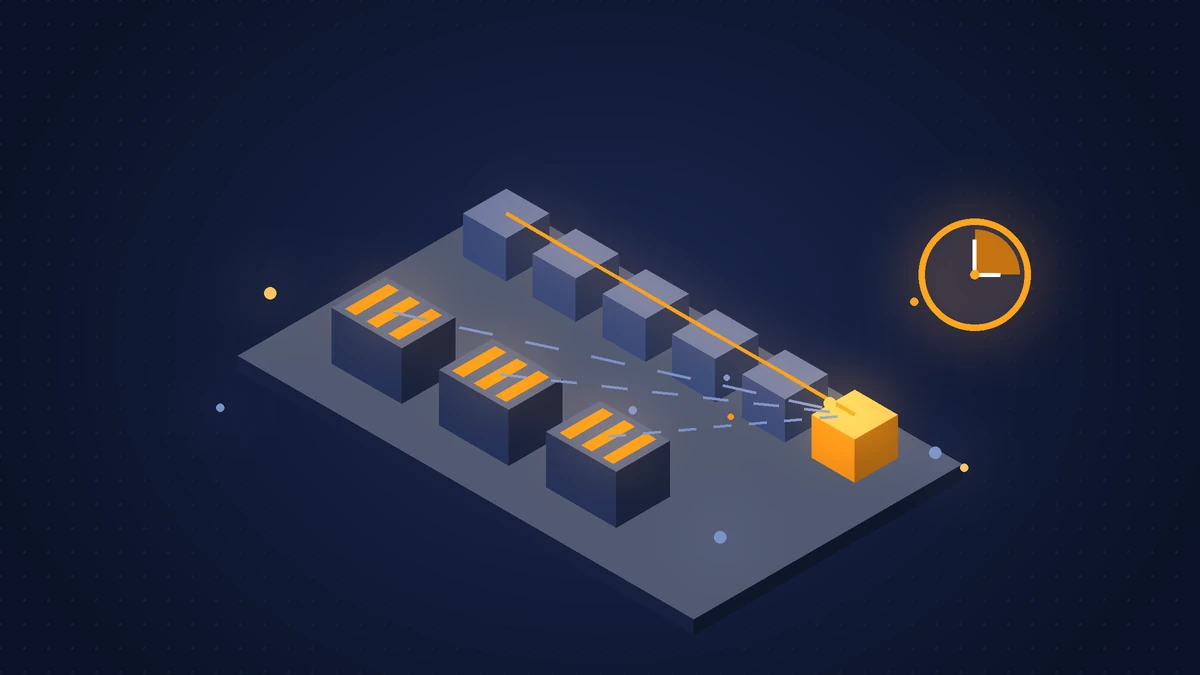
Scrypt mining. Litecoin uses Scrypt instead of Bitcoin’s SHA-256. Specialised Scrypt machines (ASICs) do most of the mining today.
Faster blocks. A 2.5-minute target means payments get their first confirmation four times faster than on Bitcoin, on average.
Merged mining with Dogecoin. Miners can mine Litecoin and Dogecoin at the same time without extra work. This adds income for miners and helps keep both networks secure.
Halvings. Every 840,000 blocks (about four years), the block reward is cut in half. This slows the creation of new LTC.
MWEB privacy. MWEB is an optional feature. Users can move LTC into the MWEB side, where amounts and addresses are hidden, and later move it back. Normal Litecoin transactions remain public.
Analogy: Imagine a lottery draw every 2.5 minutes. Thousands of machines try random numbers. The first to find a winning number adds the next page of the public money book and wins a prize. The prize gets cut in half every four years, so fewer new coins appear over time.
Tokenomics and supply
Litecoin has a maximum supply of 84 million LTC, and about 77.87 million are already in circulation.
| Supply item | Detail |
|---|---|
| Max supply | 84,000,000 LTC |
| Circulating supply | About 77,871,887 LTC (CoinMarketCap, as of November 26, 2026) |
| Current block reward | 6.25 LTC (since August 2, 2023) |
| Halving interval | Every 840,000 blocks (about four years) |
| Next halving | Expected around late July 2027, at block 3,360,000, cutting the reward to 3.125 LTC |
| Smallest unit | 1 litoshi = 0.00000001 LTC |
| Pre-mine / ICO | None |
Why 84 million? Litecoin's blocks come four times faster than Bitcoin's, and its total supply is four times larger (4 × 21 million). The issuance curve is similar, just scaled.
How much new LTC is created? At 6.25 LTC per block and about 576 blocks per day, roughly 3,600 new LTC are created daily. After the 2027 halving, that falls to about 1,800 LTC per day.
Example: Because about 92.7% of all LTC has already been mined, new supply now has a smaller effect on the total than in Litecoin's early years.
What is Litecoin used for?
Litecoin is used mainly for payments, transfers, trading and as a testing ground for Bitcoin-style technology.
- Payments. Low fees and quick blocks make LTC practical for online and in-store purchases through payment processors.
- Sending money. People use LTC to move value across borders quickly.
- Trading and investment. Many investors hold LTC as part of a crypto portfolio, directly or through the US spot ETF.
- Optional privacy. MWEB lets users make confidential transactions when they choose.
- Testing new ideas. Upgrades such as SegWit were activated on Litecoin before Bitcoin.
- Future smart contracts. A project called LitVM aims to bring Ethereum-style smart contracts to Litecoin; it was still in development in 2026.
Example: A freelancer invoices a client abroad in LTC. The client pays in minutes, and the freelancer converts part of it to local currency on an exchange, avoiding slow international bank transfers.
Where can you buy Litecoin?
You can buy LTC on almost every major global crypto exchange, on many payment apps, and through some decentralised swap services.
Centralised exchanges and apps (check availability in your country):
- Large exchanges such as Binance, Coinbase, Kraken, OKX and Bybit list LTC.
- Payment and brokerage apps, including PayPal and Robinhood in the US, offer LTC in supported regions.
Exchange-traded fund (US):
- The Canary Litecoin ETF (LTCC) trades on Nasdaq. With an ETF you own fund shares, not LTC itself.
Decentralised options:
- Atomic-swap and cross-chain swap services let you trade other coins for native LTC.
- Wrapped versions of LTC exist on other blockchains; these rely on a bridge or custodian.
Make sure you are buying native LTC on the Litecoin network unless you specifically want a wrapped version.
How to buy Litecoin step by step
You buy LTC by choosing a trusted exchange, verifying your account, depositing money, placing an order and moving LTC to your own wallet if you want.

- Choose a platform. Pick an exchange or app licensed in your country that lists LTC.
- Register and secure your account. Complete identity checks (KYC) and enable two-factor authentication (2FA).
- Deposit funds. Add US dollars (USD) by bank transfer, card or another supported method.
- Find the LTC market. Search for LTC/USD or LTC/USDT.
- Place your order. Use a "market" order to buy now, or a "limit" order to set your price.
- Set up a Litecoin wallet. Install a wallet that supports LTC and write down your recovery phrase.
- Withdraw to your wallet. Choose the Litecoin network, paste your LTC address, and send a small test amount first.
Worked $100 example (illustration only, not a price quote): Suppose LTC costs $50 and the exchange charges a 0.5% fee.
- Fee: $100 × 0.5% = $0.50
- Money used to buy LTC: $99.50
- LTC received: $99.50 ÷ $50 = 1.99 LTC
- When you withdraw, the exchange may charge a small LTC withdrawal fee. The Litecoin network fee itself is usually very low.
How to store Litecoin safely
The safest way to store LTC is in a wallet where you control the recovery phrase, with a hardware wallet for larger amounts.
Wallet options:
- Litecoin Core: the official full-node wallet from litecoin.org. It downloads the whole blockchain.
- Mobile and desktop wallets: many multi-coin wallets support LTC; some also support MWEB.
- Hardware wallets: devices such as Ledger and Trezor support LTC and keep your keys offline.
- Exchange accounts: convenient, but the exchange controls your keys. Some exchanges handle MWEB deposits differently, so check before sending private LTC to an exchange.
Safety rules:
- Write your recovery phrase on paper or metal and keep it offline.
- Keep wallet software updated. In April 2026, users and miners running outdated software were at risk during the MWEB incident.
- Check the address type: LTC addresses often start with "L," "M" or "ltc1." Do not send LTC to a Bitcoin address.
- Ignore messages offering to "double your LTC." They are scams.
Example: Diego keeps a small amount of LTC in a mobile wallet for payments and the rest on a hardware wallet. After the April 2026 incident, he updated his wallet app straight away, as the Litecoin team advised.
Pros and cons
Litecoin offers a long track record and cheap, quick payments, but it has lost market position to newer networks and had a serious bug in 2026.
| Pros | Cons |
|---|---|
| Running since 2011 with a long track record | Price far below its 2021 high |
| Fixed 84 million supply with halvings | Few unique features compared with newer blockchains |
| Low fees and 2.5-minute blocks | MWEB bug caused a 13-block reorganisation in 2026 |
| Listed on nearly every exchange, plus a US spot ETF | Mining concentrated in a few large pools |
| Merged mining with Dogecoin adds security | Smart contracts (LitVM) still in development |
| Optional privacy through MWEB | Privacy features can draw regulatory attention |
Risks to know
The main risks for LTC are price volatility, technical bugs, mining concentration, competition and regulation.
- Price volatility. LTC reached about $412.96 on May 10, 2021 (CoinMarketCap) and has traded far below that level since.
- Technical risk. On April 25, 2026, an MWEB bug let attackers push invalid transactions through outdated mining nodes. A 13-block reorganisation reversed them, but some cross-chain swap services reported losses from double-spend attempts. Developers have also debated whether the bug was truly unknown before the attack.
- Mining concentration. A few large mining pools produce much of Litecoin's blocks.
- Competition. Stablecoins, Bitcoin's Lightning Network and fast smart-contract chains compete for payments.
- ETF demand. The spot ETF has existed since October 2025, but early interest has been modest, according to 2026 reports.
- Privacy and regulation. Because MWEB hides transaction details, some exchanges or regulators could restrict privacy features.
- User mistakes. Sending to the wrong address or network can lose funds.
Example: Users who accepted large LTC payments during the April 2026 incident without waiting for extra confirmations faced more risk. Waiting for several confirmations on big payments is a simple protection.
Price history
LTC started at a few cents in 2011, had big peaks in December 2017 and May 2021, and has since traded far below its record.
| Date | Event | Price (USD) | Source |
|---|---|---|---|
| January 14, 2015 | All-time low | About $1.11 | CoinMarketCap |
| May 10, 2021 | All-time high | About $412.96 | CoinMarketCap |
| August 2, 2023 | Third halving (reward cut to 6.25 LTC) | — | Litecoin network |
Different data sites record different peaks. For example, Coinbase's own market recorded a high of $420 on December 12, 2017, while CoinMarketCap shows its record on May 10, 2021.
Key points:
- LTC's two biggest rallies came in late 2017 and spring 2021, alongside the wider crypto market.
- Past halvings have not reliably been followed by new highs.
- In 2026, LTC traded around $45–$55 for much of the year, according to several market reports, roughly 87–89% below its record.
Past prices do not tell you what will happen next. This guide does not make price predictions.
Litecoin vs Bitcoin
Litecoin and Bitcoin work in a similar way, but Litecoin has faster blocks, a larger supply and a different mining algorithm, while Bitcoin has far more security and value.
| Feature | Litecoin (LTC) | Bitcoin (BTC) |
|---|---|---|
| Launch | 2011 | 2009 |
| Block time | About 2.5 minutes | About 10 minutes |
| Max supply | 84 million | 21 million |
| Mining algorithm | Scrypt | SHA-256 |
| Halving interval | Every 840,000 blocks | Every 210,000 blocks |
| Optional privacy | Yes (MWEB) | No built-in privacy layer |
| Main role | Cheap, quick payments | Store of value and settlement |
Example: For a $20 online purchase, Litecoin usually confirms faster and costs less on-chain. For storing a large amount of value for decades, many people prefer Bitcoin because of its much larger network and security.
Frequently Asked Questions
What is Litecoin in simple words?
Litecoin is a cryptocurrency similar to Bitcoin but faster and cheaper for payments. It was created by Charlie Lee in 2011.
How many Litecoins will exist?
At most 84 million LTC. About 77.87 million existed on November 26, 2026, according to CoinMarketCap.
When is the next Litecoin halving?
Around late July 2027, at block 3,360,000. The block reward will fall from 6.25 LTC to 3.125 LTC.
Is Litecoin private?
Normal Litecoin transactions are public. The optional MWEB feature lets users make confidential transactions if they choose.
Is there a Litecoin ETF?
Yes. The Canary Litecoin ETF (LTCC) has traded on Nasdaq in the US since October 2025.
What happened to Litecoin in April 2026?
On April 25, 2026, a bug in MWEB was exploited. A 13-block reorganisation reversed the invalid transactions, and a software update fixed the bug.
Can I mine Litecoin at home?
Only with specialised Scrypt mining machines. Profit depends on electricity costs, hardware prices and the LTC price.
Sources
- Litecoin official website: https://litecoin.org
- Litecoin Core source code: https://github.com/litecoin-project/litecoin
- CoinMarketCap – Litecoin (LTC) market data: https://coinmarketcap.com/currencies/litecoin/
- The Block – Litecoin 13-block reorganisation after MWEB exploit (April 25, 2026): https://www.theblock.co/news/ecosystems/2026-04-25-litecoin-rewrites-three-hours-of-history-to-undo-its-first-major-privacy-layer-exploit-398892
- Bitcoin.com – Litecoin supply and halving data: https://www.bitcoin.com/price/litecoin-ltc
This guide is for education only and is not financial, investment or tax advice. Always do your own research and only invest what you can afford to lose. See our Disclaimer and Editorial Policy.