
Last updated November 26, 2026. Educational content only, not financial advice. Crypto prices can fall sharply and you can lose money.
Quick answer: What is Dogecoin? Dogecoin (DOGE) is a cryptocurrency created in December 2013 as a light-hearted joke based on the “Doge” Shiba Inu meme. It runs on its own proof-of-work blockchain, confirms a new block about every minute, and has no maximum supply. Today it is used for tipping, small payments and trading.
- Dogecoin was created in December 2013 by software engineers Billy Markus and Jackson Palmer as a fun, friendly alternative to Bitcoin.
- It has its own blockchain, uses the Scrypt mining algorithm and is merge-mined with Litecoin, which helps secure the network.
- Miners create 10,000 new DOGE per block, about 5 billion DOGE per year, and there is no supply cap.
- Its price is driven heavily by community energy and social media, which makes it very volatile.
- Since late 2025, several spot Dogecoin ETFs have launched in the US, giving traditional investors another way to get exposure.
Quick facts
| Item | Detail |
|---|---|
| Symbol | DOGE |
| Launch year | 2013 (December) |
| Founder / team | Billy Markus and Jackson Palmer; now maintained by volunteer developers, supported by the Dogecoin Foundation |
| Consensus method | Proof of work (Scrypt), merge-mined with Litecoin (AuxPoW) |
| Max supply | No maximum (10,000 DOGE created per block) |
| Circulating supply | About 156,900,592,860 DOGE (as of November 26, 2026, source: CoinMarketCap) |
| Official website | https://dogecoin.com |
| Whitepaper / docs | No formal whitepaper; code and docs at https://github.com/dogecoin/dogecoin |
| Block explorer | https://dogechain.info |
What is Dogecoin?
Dogecoin is a digital currency that started as a joke but grew into one of the best-known cryptocurrencies in the world.
The name and logo come from the “Doge” internet meme, a picture of a Shiba Inu dog with funny captions. The creators wanted a coin that felt fun and welcoming, at a time when many crypto projects made very serious promises.
Technically, Dogecoin is a real, working cryptocurrency. It has its own blockchain, its own miners and its own wallets. You can send DOGE to anyone in the world, and the network confirms a new block about every minute.
Example: On social media, people have used DOGE to “tip” each other for helpful posts or funny jokes, a bit like leaving a few coins in a street musician’s hat. Because fees are usually small, tiny amounts can make sense.
Unlike many newer meme coins, Dogecoin is not a token built on another blockchain. It is its own network, which is one reason it has lasted since 2013.
History and founders
Dogecoin was launched in December 2013 by Billy Markus, a software engineer in Portland, and Jackson Palmer, who worked in marketing in Sydney.
Markus based Dogecoin’s code on Luckycoin and Litecoin, which both use the Scrypt mining algorithm. Palmer bought the domain name and helped shape the friendly brand. Both saw it as a joke about the many copy-cat coins appearing at the time.
Key moments:
- December 2013: Dogecoin launches and quickly builds a large, playful online community.
- 2014: The community raises funds for causes such as the Jamaican bobsled team’s trip to the Winter Olympics. The Dogecoin Foundation, a nonprofit, is set up the same year.
- March 2014: A random block reward is replaced with a fixed schedule.
- September 2014: Merged mining with Litecoin begins, strengthening security.
- 2015: Block 600,000 is reached and the reward becomes a permanent 10,000 DOGE. Jackson Palmer steps away from crypto the same year.
- January 28, 2021: DOGE records its largest single-day gain, about 355% (CoinGlass).
- May 8, 2021: DOGE reaches its all-time high during a wave of retail buying and celebrity attention.
- November 2025: Grayscale’s GDOG (November 24) and Bitwise’s BWOW (November 26) spot Dogecoin ETFs begin trading in the US.
- January 22, 2026: The 21Shares Dogecoin ETF (TDOG), endorsed by the Dogecoin Foundation, launches on Nasdaq.
Example: Dogecoin’s journey is like a garage band that formed for fun, played a few local shows, and years later ended up selling out stadiums. The original purpose was humour; the outcome surprised even its creators.
How does Dogecoin work?
Dogecoin works by proof of work: miners use computers to solve puzzles, and the winner adds the next block of transactions and earns 10,000 new DOGE.
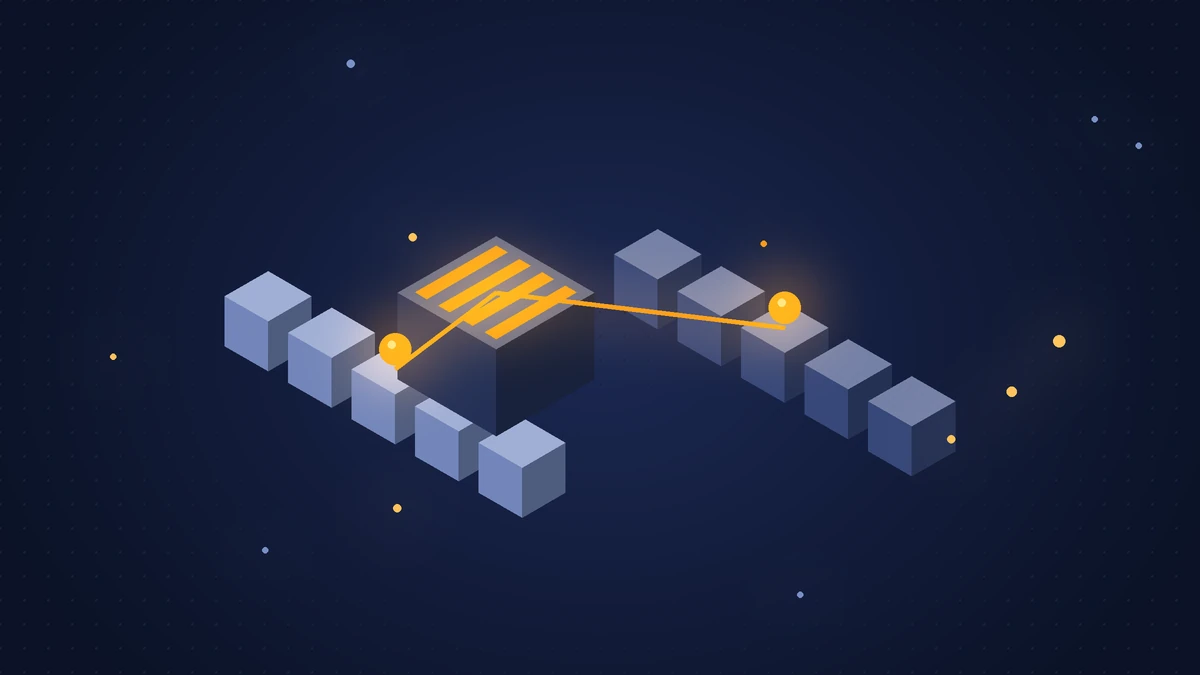
Scrypt mining. Dogecoin uses the Scrypt algorithm, the same one Litecoin uses. This means Bitcoin mining machines (which use SHA-256) cannot mine DOGE.
Fast blocks. Dogecoin targets one block every minute, compared with Bitcoin’s 10 minutes. Network difficulty adjusts after every block to keep that pace.
Merged mining (AuxPoW). Since September 2014, miners can mine Litecoin and Dogecoin at the same time with the same work. The two blockchains stay separate, but sharing miners means much more computing power protects Dogecoin than it would have alone.
Analogy: Imagine two neighbouring towns that share one team of security guards. The guards patrol both towns in the same shift without extra effort. Each town keeps its own records and rules, but both are safer than if each had a tiny team of its own. That is what merged mining does for Dogecoin and Litecoin.
Transactions. When you send DOGE, your wallet signs the payment with your private key. Miners include it in a block, and more blocks added on top make it harder to reverse. For larger payments, people usually wait for several confirmations.
Tokenomics and supply
Dogecoin has no supply cap: about 156.9 billion DOGE exist, and roughly 5 billion more are added each year.
| Supply item | Detail |
|---|---|
| Circulating supply | About 156,900,592,860 DOGE (CoinMarketCap, as of November 26, 2026) |
| Block reward | 10,000 DOGE per block, fixed since block 600,000 (2015) |
| New DOGE per year | About 5.256 billion if blocks arrive every minute (10,000 × 60 × 24 × 365) |
| Halvings | None |
| Smallest unit | 0.00000001 DOGE (sometimes called a "koinu") |
| Pre-mine / ICO | None |
Why no cap? A fixed number of new coins each year means the percentage inflation falls over time. When the supply was smaller, 5 billion new coins was a big increase. Now it is a smaller share of the total. Supporters say steady issuance keeps fees low and encourages spending instead of hoarding. Critics say constant new supply makes it harder for the price to rise unless demand grows too.
Example: With about 156.9 billion DOGE in circulation, adding 5.256 billion in a year is an increase of roughly 3.4%. Ten years from now, the same 5.256 billion will be a smaller percentage of a larger total.
There is no team or investor allocation, and no token unlock schedule. Every DOGE in existence was mined.
What is Dogecoin used for?
Dogecoin is mainly used for tipping, small payments, trading and as a way to be part of a large online community.
- Tipping and small payments. Low fees and one-minute blocks make DOGE practical for sending small amounts.
- Merchant payments. Some businesses accept DOGE directly or through payment processors. Availability changes, so check with the merchant first.
- Charity and community projects. The Dogecoin community has a long history of fundraising.
- Trading and investment exposure. Many people buy DOGE simply to speculate on its price, either directly or through ETFs.
- Cultural participation. For many holders, owning DOGE is about belonging to a fun, friendly internet culture.
Example: A streamer sets up a DOGE address on screen. Viewers who enjoy the show can send 20 DOGE as a thank-you without the stream host needing a bank card terminal.
It is worth being clear: Dogecoin does not run a large smart-contract ecosystem like Ethereum. Its main strength is simple payments and its brand.
Where can you buy Dogecoin?
You can buy Dogecoin on most major global crypto exchanges, on many trading and payment apps, and through some decentralised options.
Centralised exchanges and apps (check availability in your country):
- Large global exchanges such as Binance, Coinbase, Kraken, OKX and Bybit list DOGE.
- Some brokerage and payment apps, such as Robinhood in the US, also let users buy DOGE.
Exchange-traded funds (US):
- Spot DOGE ETFs include Grayscale's GDOG, Bitwise's BWOW and 21Shares' TDOG, which trade on US stock exchanges. With an ETF you own fund shares, not the coins themselves.
Decentralised options:
- Because DOGE has its own blockchain, decentralised exchanges usually trade wrapped versions of DOGE on other networks. Wrapped tokens depend on a bridge or custodian, which adds risk.
- Some non-custodial wallets offer built-in swaps from other coins to native DOGE.
Always confirm that a platform is licensed or allowed where you live, and check you are buying native DOGE, not a look-alike token with a similar name.
How to buy Dogecoin step by step
You buy Dogecoin by choosing a trusted platform, verifying your account, adding funds, placing an order and, if you like, moving DOGE to your own wallet.

- Choose a platform. Pick an exchange or app that is legal in your country and lists DOGE.
- Create and secure your account. Sign up, verify your identity (KYC) and turn on two-factor authentication (2FA).
- Deposit money. Add US dollars (USD) by bank transfer, card or another method the platform supports.
- Find the DOGE market. Search for DOGE or the DOGE/USD trading pair.
- Place your order. Use a "market" order to buy at the current price, or a "limit" order to set your own price.
- Check the result. Confirm the DOGE amount in your account and review the fees you paid.
- Withdraw to your own wallet (optional). Copy your wallet's DOGE address, send a small test amount first, then send the rest.
Worked $100 example (illustration only, not a price quote): Suppose DOGE costs $0.10 and the platform charges a 1% fee.
- Fee: $100 × 1% = $1.00
- Money used to buy DOGE: $100 − $1.00 = $99.00
- DOGE received: $99.00 ÷ $0.10 = 990 DOGE
- If you withdraw, the platform may also charge a small network fee in DOGE.
Some apps include their fee inside the price instead of showing it separately, so compare the final DOGE amount between platforms.
How to store Dogecoin safely
The safest way to store Dogecoin is in a wallet where you control the private keys, with a hardware wallet for larger amounts.
Wallet options:
- Dogecoin Core: the official full-node wallet, available through dogecoin.com. It downloads the whole blockchain, so it needs disk space.
- Mobile and desktop wallets: many popular multi-coin wallets support DOGE. Download only from official sources.
- Hardware wallets: devices such as Ledger and Trezor support Dogecoin and keep your keys offline.
- Exchange accounts: convenient for trading, but the exchange holds the keys. If it fails or freezes withdrawals, you may lose access.
Safety rules:
- Write your recovery (seed) phrase on paper or metal and store it safely. Never type it into a website or share it.
- Be careful with "giveaway" scams that promise to double your DOGE. They are always fake.
- Double-check the full address before sending, and send a small test first.
- Keep your wallet software up to date.
Example: Priya keeps $30 of DOGE in a phone wallet for tips and keeps the rest on a hardware wallet. When she saw a social media post promising "send 1,000 DOGE, get 2,000 back", she recognised it as a scam and ignored it.
Pros and cons
Dogecoin's strengths are its brand, community and simple payments, while its weaknesses are unlimited supply and heavy dependence on hype.
| Pros | Cons |
|---|---|
| One of the oldest and best-known cryptocurrencies | Price swings are extreme and often driven by social media |
| Own blockchain with merged-mining security from Litecoin | No supply cap; about 5 billion DOGE added every year |
| Fast one-minute blocks and usually low fees | Limited smart-contract features compared with newer chains |
| Listed on nearly every major exchange | Development is volunteer-driven and slower than some projects |
| Spot ETFs available in the US | Large holders ("whales") own a big share of coins |
| Friendly, active global community | Many look-alike meme coins can confuse beginners |
Risks to know
The main risks of Dogecoin are price volatility, hype cycles, scams and the steady growth of supply.
- Volatility. DOGE rose from fractions of a cent to about $0.74 in 2021, then fell sharply. By late October 2026 it traded near $0.076, about 90% below its record (CoinGabbar, October 26, 2026).
- Hype risk. Celebrity posts and online trends can move the price quickly in either direction.
- Inflation. New DOGE is created forever. If demand does not grow, extra supply can weigh on the price.
- Concentration. A small number of addresses hold a large share of DOGE. Large sales can move the market. (Some of these addresses belong to exchanges holding coins for many users.)
- Scams and fake tokens. Fraudsters use the Dogecoin name for fake giveaways and copy-cat tokens.
- Mining centralisation. Much of the hashing power comes from a few large Litecoin/Dogecoin mining pools.
- Regulation and taxes. Rules for crypto differ by country and can change. Selling DOGE may create a taxable gain.
Example: Someone who bought DOGE near the May 2021 peak and held it until late 2026 would have seen the value of their coins fall by around 90%, based on the figures above. That is why it is wise to invest only what you can afford to lose.
Price history
Dogecoin's price went from almost nothing in its early years to a peak in May 2021, followed by long periods of decline.
| Date | Event | Price (USD) | Source |
|---|---|---|---|
| May 7, 2015 | All-time low | About $0.0000855 | CoinMarketCap |
| January 28, 2021 | Largest single-day gain, about 355% | — | CoinGlass |
| May 8, 2021 | All-time high | About $0.7376 | CoinMarketCap |
| October 26, 2026 | Trading level | About $0.076 | CoinGabbar |
Different data providers record slightly different highs and lows. For example, CoinGecko lists the all-time high at about $0.7316 and the all-time low at about $0.0000869.
Key points:
- DOGE spent most of its first seven years below one cent.
- The early-2021 rally was linked to online trading communities, celebrity posts and a strong overall crypto market.
- Late 2025 brought the first US spot Dogecoin ETFs, but they did not stop prices from falling through much of 2026.
Past prices do not tell you what will happen next. This guide does not make price predictions.
Dogecoin vs Shiba Inu
Dogecoin and Shiba Inu are both dog-themed meme coins, but Dogecoin has its own blockchain while Shiba Inu began as a token on Ethereum.
| Feature | Dogecoin (DOGE) | Shiba Inu (SHIB) |
|---|---|---|
| Launch year | 2013 | 2020 |
| Blockchain | Its own proof-of-work chain | Ethereum token (ERC-20), plus its own Shibarium network |
| Supply | No cap; 10,000 DOGE per block | Very large fixed supply, measured in hundreds of trillions |
| Security | Mined, merge-mined with Litecoin | Depends on Ethereum (and Shibarium for its layer-2) |
| Main uses | Payments, tipping, trading | Trading, ecosystem tokens and apps |
| US spot ETFs | Yes (from November 2025) | Not covered in this guide |
Example: Sending DOGE uses the Dogecoin network and DOGE for fees. Sending SHIB on Ethereum requires ETH to pay the network fee, which can surprise new users.
Frequently Asked Questions
What is Dogecoin in simple words?
Dogecoin is a cryptocurrency that started in 2013 as a joke about a dog meme. It now works as a real digital currency with its own blockchain.
Who created Dogecoin?
Billy Markus and Jackson Palmer created Dogecoin in December 2013. Today, volunteer developers maintain the code, supported by the Dogecoin Foundation.
Does Dogecoin have a maximum supply?
No. Miners create 10,000 DOGE with every block, or about 5 billion DOGE each year, and there is no limit.
Is Dogecoin a good investment?
This guide does not give investment advice. Dogecoin is very volatile and driven by sentiment, so only use money you can afford to lose and do your own research.
Can I mine Dogecoin?
Yes, but you need Scrypt mining hardware (ASICs) to compete. Most miners mine Litecoin and Dogecoin together through merged mining.
Is there a Dogecoin ETF?
Yes. In the US, spot Dogecoin ETFs from Grayscale (GDOG), Bitwise (BWOW) and 21Shares (TDOG) launched between November 2025 and January 2026.
How fast is a Dogecoin transaction?
A new block is created about every minute. Many services wait for several blocks before treating a payment as final.
What is the smallest unit of Dogecoin?
The smallest unit is 0.00000001 DOGE, sometimes called a "koinu".
Sources
- Dogecoin official website: https://dogecoin.com
- Dogecoin Core source code and documentation: https://github.com/dogecoin/dogecoin
- CoinMarketCap – Dogecoin (DOGE) market data: https://coinmarketcap.com/currencies/dogecoin/
- CoinGecko – Dogecoin (DOGE) market data: https://www.coingecko.com/en/coins/dogecoin
- Trezor Learn – What is Dogecoin (merged mining and issuance): https://trezor.io/learn/supported-assets/other-cryptocurrencies/what-is-dogecoin
This guide is for education only and is not financial, investment or tax advice. Always do your own research and only invest what you can afford to lose. See our Disclaimer and Editorial Policy.