
Last updated November 26, 2026. Educational content only, not financial advice. Crypto prices can fall sharply and you can lose money.
Quick answer: What is Bitcoin Cash? Bitcoin Cash (BCH) is a cryptocurrency that split from Bitcoin on August 1, 2017, to make everyday payments cheaper and faster. It keeps Bitcoin’s 21 million coin limit and proof-of-work mining, but allows much larger blocks, so more transactions fit in each block and fees usually stay at a fraction of a cent.
- Bitcoin Cash was created in a “hard fork” of Bitcoin at block 478,558 on August 1, 2017. Everyone holding BTC at that moment received the same amount of BCH.
- Its main idea is “peer-to-peer electronic cash”: low fees and fast payments by increasing block size, rather than moving payments to other layers.
- BCH has the same 21 million maximum supply and halving schedule as Bitcoin; about 20.12 million BCH existed as of November 26, 2026 (CoinMarketCap).
- Since 2023, Bitcoin Cash supports native tokens (CashTokens), and its May 15, 2026 upgrade added more smart-contract features.
- BCH has much less mining power than Bitcoin and has already split several times, which are important risks.
Quick facts
| Item | Detail |
|---|---|
| Symbol | BCH |
| Launch year | 2017 (August 1) |
| Founder / team | No single founder; created by a group of developers, miners and businesses who wanted bigger blocks. Today maintained by several independent node teams, such as Bitcoin Cash Node |
| Consensus method | Proof of work (SHA-256) |
| Max supply | 21,000,000 BCH |
| Circulating supply | About 20,122,134 BCH (as of November 26, 2026, source: CoinMarketCap) |
| Official website | https://bch.info |
| Whitepaper / docs | Bitcoin whitepaper: https://bch.info/bitcoin.pdf; upgrade specs: https://upgradespecs.bitcoincashnode.org |
| Block explorer | https://explorer.bitcoin.com/bch |
What is Bitcoin Cash?
Bitcoin Cash is a version of Bitcoin designed for low-cost, everyday payments, created when part of the Bitcoin community split off in 2017.
By 2017, Bitcoin was becoming popular, and its blocks, limited to about 1 MB, were filling up. Fees rose, and payments sometimes took hours to confirm. One group wanted Bitcoin to stay small and secure, adding payment layers on top. Another group wanted to make blocks much bigger so ordinary payments stayed cheap on the main chain. The second group created Bitcoin Cash.
BCH shares Bitcoin’s history up to August 1, 2017. After that, the two blockchains went separate ways with different rules.
Example: A café accepts BCH. A customer pays $3.50 for a coffee by scanning a QR code with a phone wallet. The payment appears almost instantly in the café’s wallet, and the network fee is usually less than one cent.
History and founders
Bitcoin Cash began on August 1, 2017, when a group of developers, miners and businesses split from Bitcoin to increase the block size.
No single person founded BCH. Early supporters included investor Roger Ver, mining companies such as Bitmain and ViaBTC, and the developer team Bitcoin ABC, which wrote the first BCH software.
Key moments:
- August 1, 2017: Bitcoin Cash forks from Bitcoin at block 478,558 with an 8 MB block limit. Every BTC holder receives the same amount of BCH.
- December 20, 2017: BCH reaches its all-time high, according to CoinMarketCap.
- May 2018: The block limit rises to 32 MB.
- November 2018: A dispute splits the network again, creating Bitcoin SV (BSV).
- April 8, 2020: First BCH halving cuts the block reward from 12.5 to 6.25 BCH.
- November 2020: Another dispute leads Bitcoin ABC to split off (later becoming eCash), while most of the community follows Bitcoin Cash Node.
- May 15, 2023: CashTokens add native tokens and NFTs to BCH.
- April 2024: Second halving at block 840,000 cuts the reward to 3.125 BCH.
- May 15, 2026: The “CashVM” network upgrade adds new scripting tools, including loops, for more capable smart contracts.
Example: Think of a band whose members disagree about the style of music. Some leave and form a new band using the same early songs. That is what happened in 2017, and the new band itself later split twice more.
How does Bitcoin Cash work?
Bitcoin Cash works like Bitcoin: miners use SHA-256 proof of work to add a new block about every 10 minutes, but BCH allows much bigger blocks so more transactions fit in each one.
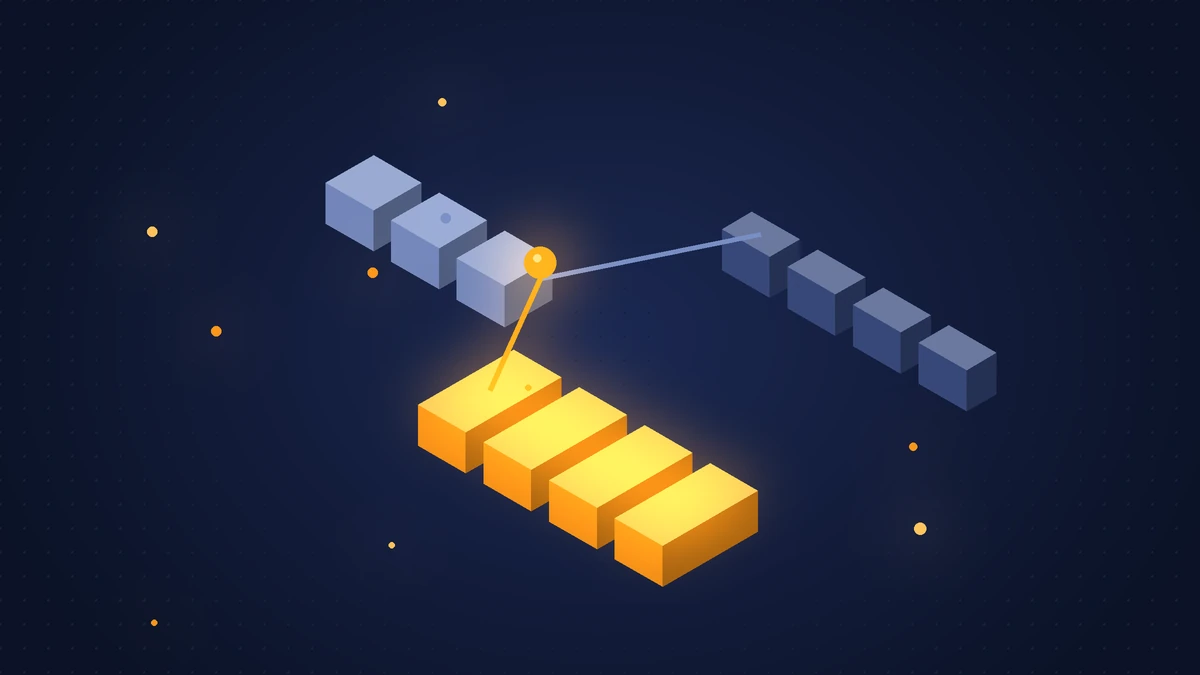
Mining. Miners use specialised machines to solve a puzzle. The winner adds the next block and earns new BCH plus fees. BCH uses the same SHA-256 algorithm as Bitcoin, so the same machines can mine either coin.
Bigger blocks. BCH’s block size limit grew from 8 MB to 32 MB and now adjusts automatically with an algorithm that responds to demand. More room means fees stay low even when the network is busy.
Difficulty adjustment. Because miners can switch between BTC and BCH, BCH uses an algorithm that adjusts mining difficulty every block to keep block times steady.
Fast payments. Even though blocks come every 10 minutes, merchants often accept small payments as soon as they appear on the network (“zero-confirmation”), which feels instant for low-value purchases.
Tokens and smart contracts. CashTokens (2023) let anyone create tokens and NFTs directly on BCH. The May 2026 CashVM upgrade added features such as loops and high-precision maths for smart contracts.
Analogy: Imagine two motorways that started as the same road. Bitcoin kept two lanes and built a fast toll road alongside (payment layers). Bitcoin Cash widened its own road to many lanes, so more cars (transactions) fit, and tolls (fees) stay cheap.
Tokenomics and supply
Bitcoin Cash has a maximum supply of 21 million BCH, and about 20.12 million are already in circulation.
| Supply item | Detail |
|---|---|
| Max supply | 21,000,000 BCH |
| Circulating supply | About 20,122,134 BCH (CoinMarketCap, as of November 26, 2026) |
| Current block reward | 3.125 BCH (since the April 2024 halving) |
| Halvings | About every 210,000 blocks (roughly four years) |
| Next halving | Expected around 2028, cutting the reward to about 1.5625 BCH |
| Smallest unit | 1 satoshi = 0.00000001 BCH |
| Pre-mine / ICO | None (coins were given 1:1 to BTC holders at the fork) |
How did people get BCH at launch? Anyone who held bitcoin in their own wallet on August 1, 2017, could claim the same amount of BCH. No new coins were sold to investors.
Why does the halving matter? Each halving cuts the number of new BCH created per block by half. This slows supply growth, similar to Bitcoin. It also reduces miners' income unless fees or the BCH price rise.
Example: At 3.125 BCH per block and about 144 blocks per day, roughly 450 new BCH are created daily. After the next halving, that drops to about 225 BCH per day.
What is Bitcoin Cash used for?
Bitcoin Cash is mainly used for payments, small transfers, trading and, increasingly, tokens and smart contracts.
- Everyday payments. Low fees make BCH practical for buying coffee, paying online or sending small amounts.
- Remittances. People can send money across borders cheaply.
- Tipping and micropayments. Tiny payments are possible because fees are a fraction of a cent.
- Tokens and NFTs. CashTokens let projects create their own tokens on BCH.
- Smart contracts. After the 2026 upgrade, developers can build more complex contracts, such as escrow or recurring payments.
- Trading. Many investors buy BCH to trade or hold as part of a crypto portfolio.
Example: A street food seller in a busy market accepts BCH through a simple phone app. Customers pay by scanning a QR code, and the seller does not pay card terminal fees.
Where can you buy Bitcoin Cash?
You can buy BCH on most major global crypto exchanges, on popular payment apps, and through some decentralised swap services.
Centralised exchanges and apps (check availability in your country):
- Large exchanges such as Binance, Coinbase, Kraken, OKX and Bybit list BCH.
- Some payment and brokerage apps, such as Robinhood in the US, also offer BCH.
- Some wallets, including Bitcoin.com's wallet, let you buy BCH inside the app through payment partners.
Decentralised options:
- Atomic-swap and cross-chain swap services let you exchange other coins for native BCH.
- Decentralised exchanges built with CashTokens are growing, but liquidity is smaller than on large exchanges.
Make sure you are buying Bitcoin Cash (BCH), not Bitcoin (BTC), Bitcoin SV (BSV) or eCash (XEC). The names are similar but they are different coins.
How to buy Bitcoin Cash step by step
You buy BCH by choosing a trusted exchange, verifying your account, depositing money, buying BCH and moving it to your own wallet if you wish.
- Choose a platform. Pick an exchange or app that is licensed in your country and lists BCH.
- Register and secure your account. Complete identity checks (KYC) and turn on two-factor authentication (2FA).
- Deposit funds. Add US dollars (USD) by bank transfer, card or another supported method.
- Find the BCH market. Search for BCH/USD or BCH/USDT. Check the ticker is "BCH".
- Place your order. Use a "market" order to buy now, or a "limit" order to set your price.
- Set up a BCH wallet. Install a wallet that supports Bitcoin Cash and save your recovery phrase.
- Withdraw on the right network. Send BCH only to a BCH address (often starting with "bitcoincash:" or "q"). Send a small test first.
Worked $100 example (illustration only, not a price quote): Suppose BCH costs $250 and the exchange charges a 0.5% fee.
- Fee: $100 × 0.5% = $0.50
- Money used to buy BCH: $99.50
- BCH received: $99.50 ÷ $250 = 0.398 BCH
- If you withdraw, the exchange may charge a small BCH withdrawal fee, but the network fee itself is usually tiny.
How to store Bitcoin Cash safely
The safest way to store BCH is in a wallet where you control the recovery phrase, with a hardware wallet for larger amounts.
Wallet options:
- Mobile and desktop wallets: several wallets support BCH, including the Bitcoin.com Wallet and Electron Cash.
- Hardware wallets: devices such as Ledger and Trezor support BCH and keep your keys offline.
- Exchange accounts: easy for trading, but the exchange holds the keys.
Safety rules:
- Never send BCH to a Bitcoin (BTC) address, or BTC to a BCH address. Funds can be hard or impossible to recover.
- Write down your recovery phrase on paper or metal and store it safely.
- Use wallets that clearly show "Bitcoin Cash" and use the CashAddr format where possible to avoid mix-ups.
- Keep your wallet software updated after network upgrades.
Example: Kemal tried to send BCH from an exchange to his BTC wallet by mistake. The withdrawal page blocked the address because it was the wrong format. Since then, he labels his wallets clearly and checks the network every time.
Pros and cons
Bitcoin Cash offers cheap, fast on-chain payments with Bitcoin's supply rules, but it has far less mining security and a history of splits.
| Pros | Cons |
|---|---|
| Very low fees for everyday payments | Much lower hashrate than Bitcoin, so weaker security |
| Same 21 million cap and halving model as Bitcoin | History of contentious splits (BSV in 2018, eCash in 2020) |
| Fast "zero-confirmation" payments for small amounts | Smaller developer and merchant ecosystem than Bitcoin |
| Native tokens (CashTokens) and growing smart contracts | Confusing names (BTC, BCH, BSV, XEC) |
| Listed on most major exchanges | Price far below its 2017 peak |
| No pre-mine or ICO | Bigger blocks can make running a full node harder over time |
Risks to know
The main risks for BCH are mining security, community splits, competition and price swings.
- Price volatility. BCH reached about $4,355 in December 2017 (CoinMarketCap) and has traded far below that level since.
- Security risk. BCH uses the same mining machines as Bitcoin but has a small fraction of Bitcoin's hashrate. In theory, a large miner could attack BCH by gaining a majority of its mining power.
- Split risk. Disagreements have already split BCH twice. Future disputes could create new chains and confusion.
- Competition. Stablecoins, Bitcoin's Lightning Network, Litecoin and many fast blockchains compete for payments.
- Adoption risk. Fewer merchants accept BCH than in the past, and payment use is hard to measure.
- User mistakes. Mixing up BTC and BCH addresses can lead to lost funds.
- Regulation and taxes. Crypto rules differ by country and can change.
Example: If a big mining pool suddenly moved its machines from Bitcoin to Bitcoin Cash, it could produce many BCH blocks quickly. BCH's difficulty algorithm responds each block, but sudden shifts are still a known weakness of smaller SHA-256 chains.
Price history
BCH launched in August 2017, reached its all-time high a few months later, and has since traded far below that level.
| Date | Event | Price (USD) | Source |
|---|---|---|---|
| August 1, 2017 | Fork from Bitcoin | — | Bitcoin Cash network |
| December 20, 2017 | All-time high | About $4,355.62 | CoinMarketCap |
| December 15, 2018 | All-time low | About $75.08 | CoinMarketCap |
Different data sites record different extremes for BCH because early trading was thin and prices varied between exchanges. For example, CoinGecko lists the all-time high at about $3,785.82 and the all-time low at about $76.93.
Key points:
- BCH's peak came during the late-2017 crypto boom.
- The November 2018 BSV split happened during a deep market downturn, which coincided with BCH's lowest price.
- Halvings and network upgrades have not on their own returned BCH to its 2017 level.
Past prices do not tell you what will happen next. This guide does not make price predictions.
Bitcoin Cash vs Bitcoin
Bitcoin Cash and Bitcoin share the same origin and supply cap, but Bitcoin focuses on being a secure store of value with small blocks, while Bitcoin Cash focuses on cheap on-chain payments with big blocks.
| Feature | Bitcoin Cash (BCH) | Bitcoin (BTC) |
|---|---|---|
| Created | 2017 (fork) | 2009 |
| Max supply | 21 million | 21 million |
| Block size | Large, adaptive (started at 32 MB in 2018) | About 1–4 MB (with SegWit) |
| Typical fee | Fraction of a cent | Varies; can be several dollars when busy |
| Mining | SHA-256 proof of work | SHA-256 proof of work |
| Security (hashrate) | Much lower | Highest of any proof-of-work chain |
| Scaling approach | Bigger on-chain blocks | Layers such as Lightning Network |
Example: To pay $5 for lunch, BCH is usually cheaper on-chain. To store a large amount of value for many years, many people prefer Bitcoin because its far greater mining power makes it more secure.
Frequently Asked Questions
What is Bitcoin Cash in simple words?
Bitcoin Cash is a version of Bitcoin created in 2017 with bigger blocks. It aims to make payments cheap and fast.
Is Bitcoin Cash the same as Bitcoin?
No. They shared the same history until August 1, 2017, but are now separate coins with different rules and prices.
How many Bitcoin Cash coins will exist?
At most 21 million BCH. About 20.12 million existed on November 26, 2026, according to CoinMarketCap.
Who created Bitcoin Cash?
No single person. A group of developers, miners and businesses who wanted bigger blocks created it in 2017.
Can I send BCH to a Bitcoin address?
No. BTC and BCH are different networks. Always use a BCH address for BCH, or you may lose your funds.
When is the next Bitcoin Cash halving?
The next halving is expected around 2028, when the block reward will fall from 3.125 BCH to about 1.5625 BCH.
What changed in the May 2026 upgrade?
The May 15, 2026 "CashVM" upgrade added new scripting tools, such as loops and high-precision maths, making smart contracts more powerful.
Sources
- Bitcoin Cash official information site: https://bch.info
- Bitcoin whitepaper (hosted by bch.info): https://bch.info/bitcoin.pdf
- Bitcoin Cash Node – May 15, 2026 network upgrade specification: https://upgradespecs.bitcoincashnode.org/2026-05-15-upgrade/
- CoinMarketCap – Bitcoin Cash (BCH) market data: https://coinmarketcap.com/currencies/bitcoin-cash/
- CoinGecko – Bitcoin Cash (BCH) market data: https://www.coingecko.com/en/coins/bitcoin-cash
This guide is for education only and is not financial, investment or tax advice. Always do your own research and only invest what you can afford to lose. See our Disclaimer and Editorial Policy.