
Last updated November 27, 2026. Educational content only, not financial advice. Crypto prices can fall sharply and you can lose money.
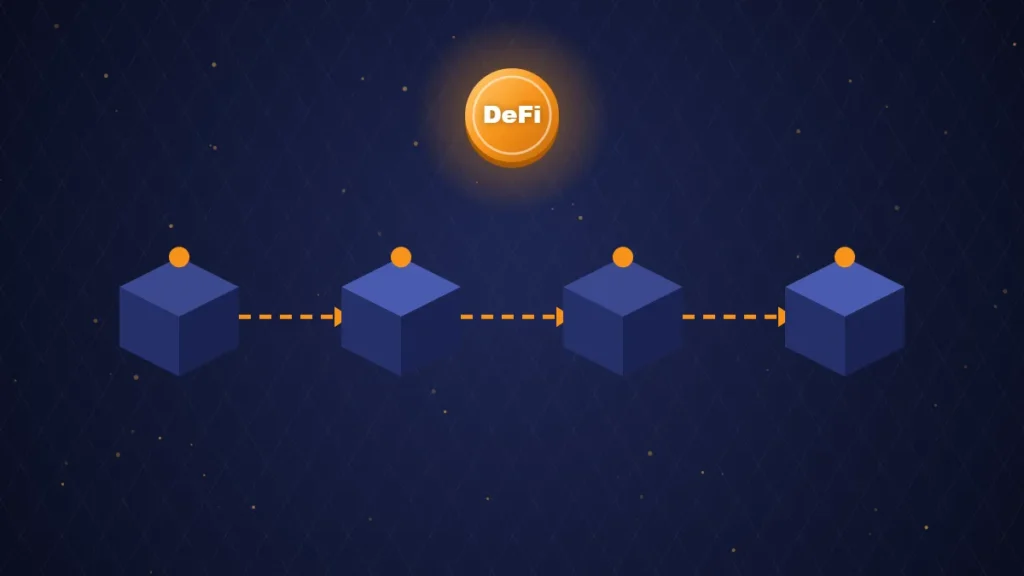
Quick answer: What is DeFi? DeFi (decentralized finance) means financial apps such as trading, lending and borrowing that run on blockchains through smart contracts instead of banks. You use them from your own wallet, 24/7, without an account. DeFi offers freedom and new opportunities, but also serious risks like hacks and scams.
- DeFi apps run on smart contracts, mostly on Ethereum, Solana and layer 2s.
- You connect a wallet; no bank account or sign-up is needed.
- Main uses: swapping, lending, borrowing, stablecoins and liquidity pools.
- Smart contract bugs, scams and bad approvals can drain funds.
How does DeFi work?
- Smart contracts hold funds and follow fixed rules.
- You connect a wallet such as MetaMask or Phantom.
- You approve the app to use your tokens.
- The contract executes your trade, loan or deposit automatically.
- Results go straight to your wallet.
Example: Bilal deposits 1,000 USDC into a lending app. Borrowers pay interest, and he earns a share of it, which changes with demand.
Popular DeFi uses
| Use | What it does | Example apps |
|---|---|---|
| Swapping | Trade tokens on a DEX | Uniswap, Jupiter, PancakeSwap |
| Lending | Earn interest by supplying tokens | Aave, Kamino |
| Borrowing | Borrow against collateral | Aave, Maker/Sky |
| Liquid staking | Stake and keep a tradable token | Lido, Jito |
| Perpetuals | Trade with leverage onchain | Hyperliquid |
DeFi vs traditional finance
| Feature | DeFi | Banks |
|---|---|---|
| Access | Anyone with a wallet | Account and approval needed |
| Hours | 24/7 | Business hours |
| Control | You hold the keys | Bank holds funds |
| Protection | Usually none | Deposit insurance in many countries |
| Mistakes | Usually final | Can often be reversed |
Risks of DeFi
- Smart contract bugs and hacks.
- Liquidation: if your collateral falls in value, it can be sold automatically.
- Scam tokens and rug pulls.
- Malicious approvals that let a contract drain your wallet.
- Impermanent loss when providing liquidity.
How to start safely
- Learn wallets and gas fees first.
- Use well-known apps and type their address yourself.
- Start with a small amount.
- Review and revoke token approvals regularly.
Frequently Asked Questions
Is DeFi legal?
It depends on your country. Rules are still developing in many places.
Can I lose money in DeFi?
Yes, through hacks, scams, liquidations or price drops.
Do I need KYC for DeFi?
Most DeFi apps do not require KYC, though some websites block certain countries.
What is TVL?
Total value locked: how much money is deposited in DeFi apps.
Which blockchain is best for DeFi?
Ethereum has the most DeFi; Solana and layer 2s offer lower fees.
Sources
- Ethereum.org – Decentralized finance (DeFi): https://ethereum.org/en/defi/
- DefiLlama – DeFi dashboard: https://defillama.com/
- US SEC – Crypto assets: https://www.sec.gov/securities-topics/crypto-assets
This guide is for education only and is not financial, investment or tax advice. Always do your own research and only invest what you can afford to lose. See our Disclaimer and Editorial Policy.