
Last updated November 27, 2026. Educational content only, not financial advice. Crypto prices can fall sharply and you can lose money.
Quick answer: What is the difference between a CEX and a DEX? A centralized exchange (CEX) like Binance or Coinbase is a company that holds your funds and matches trades. A decentralized exchange (DEX) like Uniswap or Jupiter runs on smart contracts, and you trade straight from your own wallet. CEXs are easier for beginners; DEXs give more control.
- On a CEX, the company holds your keys; on a DEX, you do.
- CEXs need KYC and support local money deposits; DEXs usually don’t.
- DEXs list many new tokens, including many scams.
- Most beginners start on a CEX and learn DEXs later.
How does a CEX work?
- You create an account and verify your identity.
- You deposit money or crypto into the exchange.
- The exchange matches your buy and sell orders in its own order book.
- Your balance is a number in the company’s database until you withdraw.
Example: you deposit rupees on a P2P market, buy USDT, then buy BTC on the same exchange.
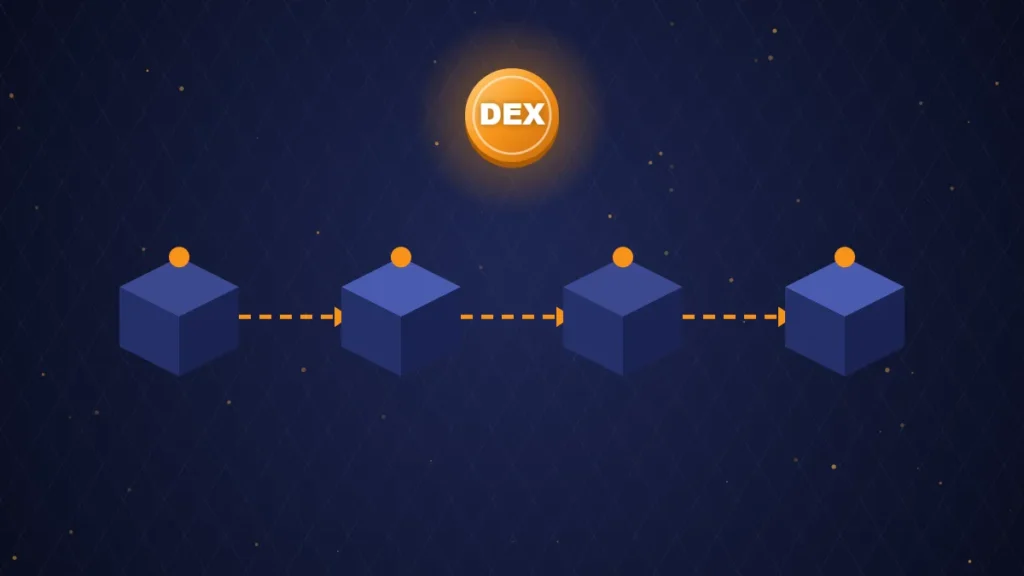
How does a DEX work?
- You connect a wallet such as MetaMask or Phantom.
- You choose tokens to swap.
- A smart contract, often an automated market maker (AMM), prices and executes the trade.
- Tokens go straight back to your wallet.
Example: you swap 50 USDC for SOL on Jupiter, paying a tiny network fee.
CEX vs DEX comparison
| Feature | CEX | DEX |
|---|---|---|
| Who holds funds | The exchange | You |
| Sign-up | Account + KYC | Just a wallet |
| Local money (fiat) | Yes, bank/card/P2P | Rarely |
| Coins listed | Reviewed list | Almost anything, including scams |
| Fees | Trading fee, often ~0.1% | Pool fee plus network gas |
| Support | Customer support | No support; mistakes are final |
| Main risks | Hacks, freezes, company collapse | Smart contract bugs, scam tokens, wrong approvals |
Which should a beginner use?
- Start with a CEX to buy your first crypto with local money.
- Learn self-custody by moving a small amount to your own wallet.
- Try a DEX with a small amount once you understand wallets, gas fees and slippage.
Safety tips
- CEX: use 2FA, an anti-phishing code and withdrawal address whitelists.
- DEX: check token contract addresses on official sites, set sensible slippage and revoke old approvals.
- Never connect your wallet to sites from random links.
Frequently Asked Questions
Is a DEX safer than a CEX?
Each has different risks. A DEX avoids company risk, but you are fully responsible for mistakes.
Do DEXs need KYC?
Most do not, but some front-ends block certain countries.
Why are some tokens only on DEXs?
Anyone can create a pool on a DEX, so new tokens appear there first, often with very high risk.
What is slippage?
The difference between the expected price and the price you actually get.
Can I lose money on a DEX by mistake?
Yes. Sending to a wrong address or approving a scam contract usually cannot be reversed.
Sources
- Ethereum.org – Decentralized exchanges: https://ethereum.org/en/defi/
- Uniswap Docs – How Uniswap works: https://docs.uniswap.org/
- US SEC – Crypto assets: https://www.sec.gov/securities-topics/crypto-assets
This guide is for education only and is not financial, investment or tax advice. Always do your own research and only invest what you can afford to lose. See our Disclaimer and Editorial Policy.