
Last updated November 26, 2026. Educational content only, not financial advice. Crypto prices can fall sharply and you can lose money.
Quick answer: What is Internet Computer? The Internet Computer is a blockchain built by the DFINITY Foundation that can host whole websites, apps and data on-chain, like a decentralised cloud. Its token, ICP, is burned to create “cycles” that pay for computing, and staked to vote. ICP launched in May 2021 and has no fixed maximum supply.
- The Internet Computer was created by the DFINITY Foundation, led by founder and chief scientist Dominic Williams; its mainnet launched on May 10, 2021.
- Apps run in “canisters,” and developers pay for computing with cycles, which are made by burning ICP, so users often do not pay fees themselves.
- About 559.1 million ICP were circulating as of November 26, 2026 (CoinMarketCap); there is no fixed maximum supply.
- DFINITY is focusing on AI, including Caffeine, a tool that builds apps from plain-language instructions, and Cloud Engines, a sovereign cloud product.
- ICP has fallen more than 99% from its launch-day high and hit a new all-time low on November 22, 2026 (CoinMarketCap).
Quick facts
| Item | Detail |
|---|---|
| Symbol | ICP |
| Launch year | 2021 (mainnet on May 10) |
| Founder / team | DFINITY Foundation, founded by Dominic Williams |
| Consensus method | Chain-key cryptography with a proof-of-stake governance system (Network Nervous System) |
| Max supply | No fixed maximum supply |
| Circulating supply | About 559,114,897 ICP (as of November 26, 2026, source: CoinMarketCap) |
| Official website | https://internetcomputer.org |
| Whitepaper / docs | https://internetcomputer.org/docs |
| Block explorer | https://dashboard.internetcomputer.org |
What is Internet Computer?
The Internet Computer is a blockchain designed to run complete software, including websites, back-end code and data, directly on-chain instead of on traditional cloud servers.
Most blockchains store transactions and small programs. Websites built on them usually still rely on regular cloud companies for their front end and data. The Internet Computer aims to replace that cloud layer, so an entire app can live on the blockchain.
Key ideas:
- Canisters: smart contracts that hold both code and data, and can serve web pages directly to users.
- Cycles: the “fuel” for computing. Developers create cycles by burning ICP and load them into their canisters.
- Reverse gas model: because developers pay for cycles, users can often use apps without paying fees or even owning tokens.
- Network Nervous System (NNS): an on-chain governance system where ICP holders stake tokens and vote on upgrades.
Example: A small business in Kenya builds an online shop on the Internet Computer. Customers visit the site in a normal browser, without a crypto wallet. The shop owner pays for computing by topping up cycles.
History and founders
The Internet Computer was developed by the DFINITY Foundation, a non-profit research organisation founded by Dominic Williams.
DFINITY started work in 2016 and spent several years on research before launching the network. CoinMarketCap describes more than $500 million spent on research and development.
Key moments:
- 2016: DFINITY begins developing the Internet Computer.
- May 10, 2021: The Internet Computer mainnet launches, and ICP begins trading. ICP reaches its all-time high of about $750.73 that day (CoinMarketCap).
- 2021–2024: ICP’s price falls sharply as early tokens unlock and the market cools.
- 2024–2025: DFINITY adds integrations with Bitcoin and Ethereum (“Chain Fusion”), and introduces “Internet Computer 2.0.”
- July 2025: DFINITY releases the alpha of Caffeine, an AI tool for building apps through conversation (Business Wire).
- November 2025: A Caffeine update coincides with ICP rising to about $6.40 (PANews via KuCoin).
- Early 2026: DFINITY publishes the “Mission 70” white paper, proposing to cut new ICP issuance by 70% (Coinspeaker).
- November 22, 2026: ICP records its all-time low of about $1.87 (CoinMarketCap).
Example: DFINITY is like a research lab that spent years building a new type of power grid, then had to convince homes and businesses to plug into it.
How does Internet Computer work?
The Internet Computer runs apps in canisters on groups of independent nodes called subnets, uses special cryptography to sign results, and charges developers in cycles made by burning ICP.
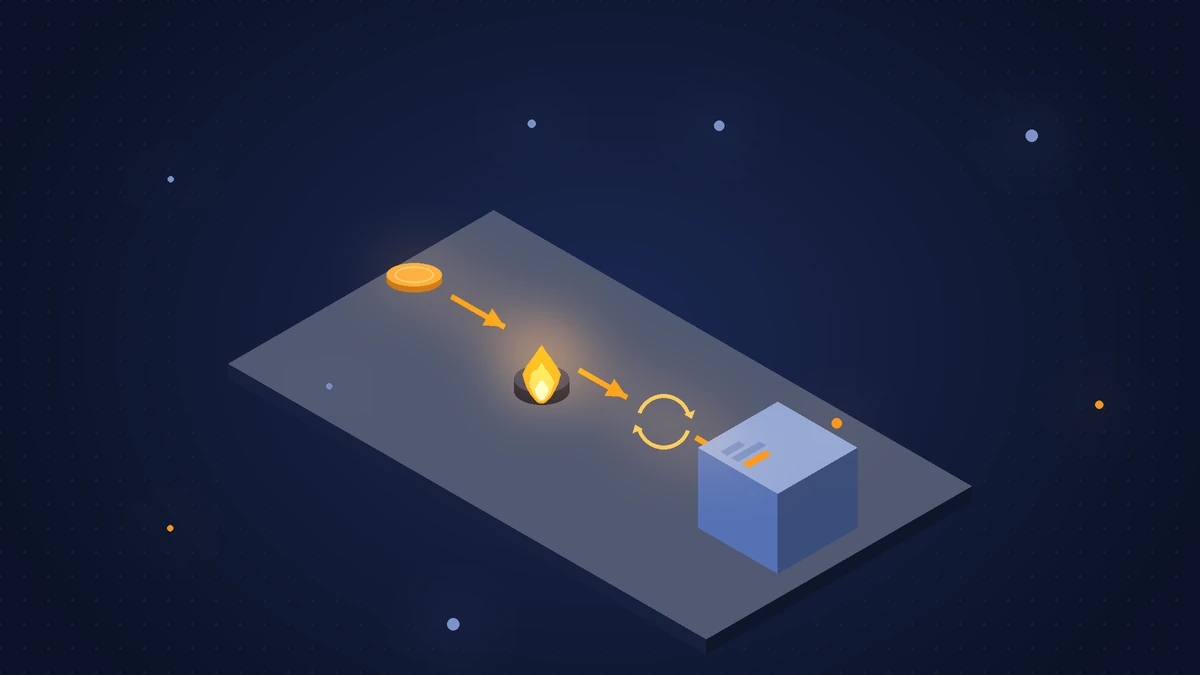
Here is the basic process:
- Nodes and subnets. Independent node providers run specialised machines in data centres. Nodes are grouped into subnets, and each subnet runs many canisters.
- Consensus. Nodes in a subnet agree on the order of messages and the results of computations.
- Chain-key signatures. Each subnet signs its results with a single public key, so anyone can check them quickly. This also lets the Internet Computer sign transactions for other chains, such as Bitcoin and Ethereum.
- Cycles. Developers burn ICP to create cycles. Canisters use cycles for computing, storage and bandwidth.
- Governance. ICP holders lock tokens in “neurons” in the NNS, vote on proposals and earn rewards.
AI focus: DFINITY describes the Internet Computer as a “self-writing cloud,” where AI tools such as Caffeine build apps from natural language prompts (CoinMarketCap).
Analogy: Think of the Internet Computer as a shared office building run by many landlords. Each company rents a room (a canister). Companies prepay electricity with tokens (cycles), so visitors can come in without paying at the door.
Tokenomics and supply
ICP has no fixed maximum supply: new ICP is created as governance rewards, while ICP is destroyed when converted into cycles.
Key supply facts:
- Circulating supply: about 559.1 million ICP as of November 26, 2026 (CoinMarketCap).
- No maximum supply: CoinMarketCap shows no max supply.
- New issuance: ICP is minted as rewards for people who stake and vote in the NNS, and for node providers.
- Burning: ICP is burned when converted into cycles, which removes it from supply.
- Mission 70: in early 2026, DFINITY proposed cutting new issuance by 70% (Coinspeaker).
- Cloud Engines buybacks: DFINITY has said 20% of revenue from its Cloud Engines product will go to ICP buybacks and burns (Crypto Briefing).
What this means: whether supply grows or shrinks depends on how much is minted for rewards versus how much is burned for computing. So far, issuance has generally been higher than burns.
Example: If 10 million ICP are minted as rewards in a year but only 2 million are burned for cycles, supply grows by 8 million. More app usage would increase burns.
What is Internet Computer used for?
ICP is used to pay for computing through cycles, to stake and vote in governance, and to access apps and cross-chain services on the Internet Computer.
Common uses:
- Fuel for apps: developers burn ICP for cycles to run websites and apps on-chain.
- Governance and staking: holders lock ICP in neurons to vote and earn rewards.
- Building with AI: Caffeine lets people create apps by describing them in plain language.
- Cross-chain DeFi: canisters can hold and send Bitcoin and other assets directly using chain-key technology.
- Sovereign cloud: DFINITY's Cloud Engines product targets companies and governments that want control over where their computing runs (Crypto Briefing).
- Trading: ICP trades on most major exchanges.
Example: A student uses Caffeine to describe a simple quiz app. Caffeine builds it and deploys it on the Internet Computer, and the student shares a link with classmates.
Where can you buy Internet Computer?
You can buy ICP on most large crypto exchanges and on decentralised exchanges built on the Internet Computer.
Centralised exchanges and apps (check availability in your country):
- Large exchanges such as Binance, Coinbase, Kraken and OKX list ICP (CoinDesk).
- Many brokerage apps also offer ICP.
Decentralised options:
- On the Internet Computer, decentralised exchanges let you swap tokens for ICP using an ICP wallet.
Network tip: ICP lives on its own blockchain. When you withdraw, choose the Internet Computer network and use an ICP-compatible address.
How to buy Internet Computer step by step
To buy ICP, choose a trusted exchange, verify your account, deposit money, place an order and move ICP to a wallet you control if you want to stake.

- Choose a platform. Pick an exchange that is legal in your country and lists ICP.
- Create and secure your account. Complete identity checks (KYC) and turn on two-factor authentication (2FA).
- Deposit funds. Add US dollars (USD) by bank transfer or card.
- Find ICP. Search for the ICP/USD or ICP/USDT pair.
- Place your order. Use a "market" order to buy now, or a "limit" order to choose your price.
- Set up an ICP wallet. Use a wallet that supports ICP, such as the NNS app with Internet Identity, and save your recovery details.
- Withdraw carefully. Choose the Internet Computer network, send a small test first, then the rest.
Worked $100 example (illustration only, not a price quote): Suppose ICP costs $2.00 and the exchange charges a 0.5% fee.
- Fee: $100 × 0.5% = $0.50
- Money used to buy ICP: $99.50
- ICP received: $99.50 ÷ $2.00 = 49.75 ICP
- A small ICP transaction fee applies when you send ICP.
How to store Internet Computer safely
The safest way to store ICP is in a wallet where you control access, such as the NNS app or a hardware wallet, and to understand the rules before staking.
Wallet options:
- NNS app: the official app for holding, staking and voting with ICP. It uses Internet Identity, which can be tied to passkeys or devices.
- Hardware wallets: Ledger supports ICP and can be connected to the NNS app.
- Other wallets: several ICP-focused wallets support ICP and ecosystem tokens.
- Exchange accounts: easy to use, but the exchange holds your keys.
Staking warning:
- When you stake ICP in a neuron, you choose a "dissolve delay." Your ICP is locked until that delay ends. Longer delays earn more voting power and rewards, but you cannot sell quickly.
Safety rules:
- Set up more than one recovery method for Internet Identity.
- Never share recovery phrases.
- Use only official links from internetcomputer.org.
Example: Diego stakes ICP with a one-year dissolve delay. When the price drops, he cannot sell the staked ICP until the delay ends. He learns to stake only what he is ready to lock.
Beginner checklist before you act:
- Use only official links from internetcomputer.org and dfinity.org.
- If you stake ICP in a neuron, remember that the dissolve delay locks your tokens for the period you choose.
- Check that your exchange supports withdrawals to the ICP network before sending.
- Read governance proposals, such as changes to issuance, from official NNS sources rather than social media summaries.
Example: Before locking ICP in a neuron, Omar writes down the dissolve delay he chose and the date his tokens could become liquid again, so he is not surprised later.
Pros and cons
The Internet Computer offers unusual technology for running full apps on-chain and a strong AI focus, but ICP has lost most of its value and its supply keeps growing.
| Pros | Cons |
|---|---|
| Hosts full websites and apps on-chain | ICP is down more than 99% from its launch high |
| Users can often use apps without paying fees | No fixed maximum supply |
| Can work directly with Bitcoin and Ethereum | Node machines and data centres are specialised and limited |
| Strong research team and long history | Adoption has been slower than hoped |
| AI tools like Caffeine lower the barrier to building | DFINITY plays a large role in development and governance |
| On-chain governance through the NNS | Staking locks tokens for long periods |
Risks to know
The main risks for ICP are price weakness, supply growth, competition, centralisation concerns and slow adoption.
- Price volatility. ICP reached about $750.73 on May 10, 2021, and fell to about $1.87 on November 22, 2026 (CoinMarketCap).
- Supply growth. New ICP is minted as rewards. Unless burns grow, supply keeps rising.
- Adoption risk. The success of ICP depends on developers and businesses actually using the network and burning cycles.
- Centralisation concerns. DFINITY's influence and the use of approved node providers lead some critics to question how decentralised the network is.
- Competition. Traditional cloud companies and other blockchains compete for the same developers.
- Staking lock-ups. Neurons can lock ICP for months or years.
Example: In mid-November 2026, ICP fell sharply during a broad altcoin sell-off, even though its own news that week was positive (CoinMarketCap). Wider market moods can outweigh project news.
Price history
ICP reached its all-time high on launch day in May 2021, fell sharply over the following years, and hit a new all-time low in November 2026.
| Date | Event | Price (USD) | Source |
|---|---|---|---|
| May 10, 2021 | Mainnet launch; all-time high | About $750.73 | CoinMarketCap |
| November 2025 | Caffeine update; rally | About $6.40 high (reported) | PANews via KuCoin |
| Early 2026 | Mission 70 white paper; rally | About $3.70 (reported) | Coinspeaker |
| November 22, 2026 | All-time low | About $1.87 | CoinMarketCap |
Key points:
- ICP's launch price was extremely high, partly because few tokens were trading at first.
- As more tokens unlocked, the price fell steeply in 2021 and 2022.
- AI-related news has caused short rallies since 2025, but the long-term trend has been down.
Past prices do not tell you what will happen next. This guide does not make price predictions.
Internet Computer vs Ethereum
The Internet Computer and Ethereum both run smart contracts, but the Internet Computer aims to host entire apps and websites on-chain with a reverse gas model, while Ethereum focuses on secure settlement and relies on other services for most app hosting.
| Feature | Internet Computer (ICP) | Ethereum (ETH) |
|---|---|---|
| Mainnet | 2021 | 2015 |
| Main developer | DFINITY Foundation | Many teams; Ethereum Foundation supports research |
| Smart contracts | Canisters (code plus data, can serve web pages) | Smart contracts (usually with off-chain front ends) |
| Who pays fees | Usually developers (cycles) | Users pay gas |
| Consensus | Chain-key cryptography with NNS governance | Proof of stake |
| Supply | No fixed maximum | No fixed maximum |
| Ecosystem size | Smaller | Largest smart contract ecosystem |
Example: A developer who wants users to use an app without wallets or fees might try the Internet Computer. A developer who wants access to the largest DeFi ecosystem might build on Ethereum.
Frequently Asked Questions
What is Internet Computer in simple words?
It is a blockchain that can host full websites and apps, like a decentralised cloud. ICP is its token.
Who created the Internet Computer?
The DFINITY Foundation, founded by Dominic Williams, created the Internet Computer.
What are cycles?
Cycles are the fuel for computing on the Internet Computer. Developers create them by burning ICP.
Does ICP have a maximum supply?
No. New ICP is minted as rewards, and ICP is burned when converted to cycles.
How many ICP are in circulation?
About 559.1 million were circulating on November 26, 2026, according to CoinMarketCap.
What is Caffeine?
Caffeine is DFINITY's AI tool that builds apps on the Internet Computer from plain-language instructions.
Can I stake ICP?
Yes. You can lock ICP in a neuron in the NNS app to vote and earn rewards, but your ICP is locked for the dissolve delay you choose.
Sources
- Internet Computer official website: https://internetcomputer.org
- Internet Computer documentation: https://internetcomputer.org/docs
- CoinMarketCap – Internet Computer (ICP) market data: https://coinmarketcap.com/currencies/internet-computer/
- Crypto Briefing – DFINITY Cloud Engines and ICP buybacks: https://cryptobriefing.com/dfinity-cloud-engines-sovereign-cloud-icp/
- Business Wire – DFINITY announces alpha release of Caffeine: https://www.businesswire.com/news/home/20250715119613/en
This guide is for education only and is not financial, investment or tax advice. Always do your own research and only invest what you can afford to lose. See our Disclaimer and Editorial Policy.