
Last updated November 26, 2026. Educational content only, not financial advice. Crypto prices can fall sharply and you can lose money.
Quick answer: What is Gram? Gram (GRAM) is the native coin of The Open Network (TON), a fast proof-of-stake blockchain first designed by Telegram’s founders. Until June 15, 2026, it was called Toncoin (TON). The rename changed only the name and ticker: there was no token swap. GRAM pays network fees, secures TON through staking and powers many Telegram-linked apps.
- On June 15, 2026, Toncoin was officially renamed Gram, and its ticker changed from TON to GRAM, after a community vote passed with 81.22% support. Holders did not need to do anything.
- The blockchain is still called The Open Network (TON). It was designed by Nikolai Durov, co-founder of Telegram.
- Telegram’s original 2018 project raised $1.7 billion but was stopped after a US SEC lawsuit; the community relaunched it and named the coin Toncoin.
- About 2.83 billion GRAM were circulating out of a total supply of about 5.27 billion as of November 26, 2026 (CoinMarketCap).
- Any website asking you to “claim” or “migrate” GRAM is a scam.
Quick facts
| Item | Detail |
|---|---|
| Symbol | GRAM (previously TON) |
| Launch year | 2019 (network design and testnet); community mainnet and token distribution from 2020 |
| Founder / team | Designed by Nikolai Durov and Pavel Durov (Telegram); now developed by the TON Foundation and community |
| Consensus method | Proof of stake with Byzantine fault tolerant (BFT) consensus, plus dynamic sharding |
| Max supply | No fixed maximum; total supply about 5.27 billion, with small yearly issuance for validator rewards |
| Circulating supply | About 2.83 billion GRAM (as of November 26, 2026, source: CoinMarketCap) |
| Official website | https://ton.org |
| Whitepaper / docs | https://docs.ton.org (original TON whitepaper by Nikolai Durov) |
| Block explorer | https://tonviewer.com |
What is Gram?
Gram is the digital currency of The Open Network (TON), a blockchain built to handle a very large number of users, with close links to the Telegram messaging app.
TON was designed to be fast and able to split itself into many parallel chains when busy. Inside Telegram, users can send coins to friends, pay for some services and use “mini apps” that run on TON.
The coin has had three names. It was first planned as Gram in 2018, renamed Toncoin after Telegram left the project in 2020, and renamed back to Gram in June 2026. The network itself kept the name TON.
Example: Omar wants to tip a creator on Telegram. He opens a TON wallet inside Telegram, sends 2 GRAM to the creator’s username, and the creator receives it within seconds.
History and founders
TON was designed by Nikolai Durov, Telegram’s technical lead, and his brother Pavel Durov, Telegram’s founder, starting in 2017.
Key moments:
- December 2017: Nikolai Durov writes the TON technical whitepaper, describing a masterchain, workchains and shard chains.
- 2018: Telegram sells “Gram” tokens to investors in two private rounds, raising $1.7 billion, one of the largest token sales ever.
- October 2019: The US Securities and Exchange Commission (SEC) sues to stop the Gram distribution, saying it was an unregistered securities offering.
- May 12, 2020: Pavel Durov announces Telegram is closing its part of the project.
- 2020 onwards: Independent developers keep the open-source network running. The project becomes The Open Network, and the coin is named Toncoin to separate it from the legal dispute.
- September 20, 2021: The coin’s all-time low (CoinMarketCap).
- April 2022: Peer-to-peer transfers become available inside Telegram through a wallet bot.
- June 2022: The initial “proof-of-work giver” distribution ends.
- 2024: Telegram expands its use of TON, for example sharing advertising revenue with channel owners in Toncoin. The coin reaches its all-time high in mid-June 2024.
- June 1, 2026: Pavel Durov proposes bringing back the Gram name.
- June 15, 2026: After an 81.22% “yes” vote, Toncoin becomes Gram and the ticker changes to GRAM. Exchanges and wallets update over the following weeks; for example, Binance opened GRAM trading on July 2, 2026.
Example: Gram’s story is like a band whose record label pulled out before the first album. The fans kept playing the songs, renamed the band to avoid legal trouble, and years later took back the original name.
How does Gram work?
Gram works on TON, a proof-of-stake network where validators lock coins to produce blocks and the network splits into many chains to handle heavy use.
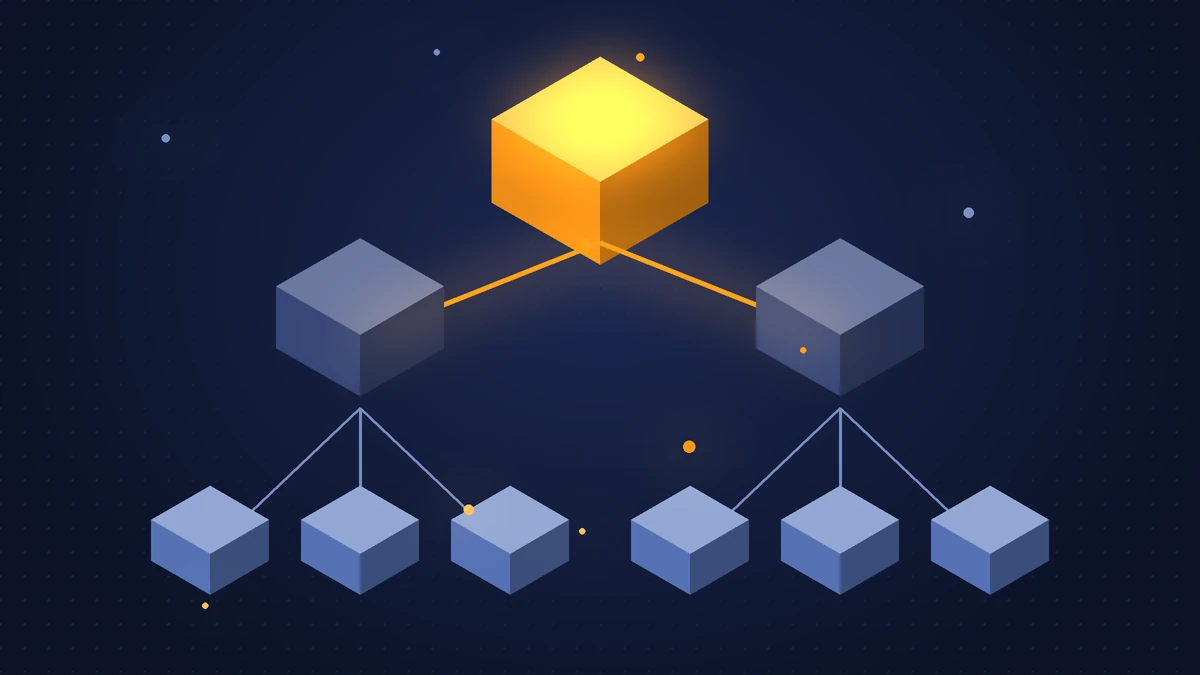
Proof of stake. Validators stake GRAM to take part. They check transactions, agree on new blocks using a Byzantine fault tolerant (BFT) process, and earn rewards. Holders who do not run a validator can join staking pools as “nominators.”
Masterchain and workchains. TON has one masterchain that keeps track of the whole system, plus workchains that process transactions and smart contracts.
Dynamic sharding. When a workchain gets busy, it can split into smaller shard chains that run in parallel, then merge back when demand falls. This helps TON handle many users.
Smart contracts. TON runs smart contracts in its own virtual machine, using languages such as FunC and Tact. Every wallet on TON is also a smart contract.
Analogy: Imagine a big post office (the masterchain) that oversees several sorting halls (workchains). When one hall gets flooded with letters, it opens extra sorting lines (shards). When things calm down, the extra lines close again.
Tokenomics and supply
Gram has no fixed maximum supply: total supply is about 5.27 billion, about 2.83 billion are circulating, and a small amount is issued each year as staking rewards.
| Supply item | Detail |
|---|---|
| Circulating supply | About 2.83 billion GRAM (CoinMarketCap, as of November 26, 2026) |
| Total supply | About 5.27 billion GRAM (CoinMarketCap, as of November 26, 2026) |
| Original design | About 5 billion coins |
| Yearly issuance | Small, for validator rewards (Decrypt has reported about 0.6% a year) |
| Fee burn | Part of network fees is burned |
| Rename effect | None on supply; it was a name and ticker change only |
Why is circulating supply much lower than total supply? Data sites exclude some large wallets, such as long-term locked or foundation-controlled holdings, from circulating supply. Large holders control a significant share of GRAM.
Example: If total supply is about 5.27 billion and yearly issuance is around 0.6%, roughly 32 million new GRAM would be created in a year, mostly paid to validators and nominators.
What is Gram used for?
Gram is used for payments, network fees, staking and apps inside the Telegram ecosystem.
- Payments and transfers: send GRAM to friends or businesses, including through Telegram.
- Network fees: every transaction and smart-contract action on TON costs a small fee in GRAM.
- Staking: validators and nominators stake GRAM to secure the network and earn rewards.
- Telegram mini apps and games: many apps inside Telegram use TON for in-app payments.
- Usernames and ads: Telegram has used TON for selling collectible usernames on Fragment and for sharing advertising revenue with channel owners.
- Tokens and DeFi: stablecoins and other tokens run on TON, with decentralised exchanges built on the network.
Example: A Telegram channel owner earns a share of ad revenue paid in GRAM. She can keep it, send it to her team, or swap it for a stablecoin on a TON decentralised exchange.
Where can you buy Gram?
You can buy GRAM on many large crypto exchanges, inside Telegram's wallet in supported regions, and through TON decentralised exchanges.
Centralised exchanges (check availability in your country):
- Many large exchanges list GRAM, including Binance, OKX, Bybit, KuCoin and Gate. Some may still show the old TON name in places during the transition.
Inside Telegram:
- Telegram's built-in wallet lets users in supported regions buy and send GRAM. This wallet is custodial for some features, meaning a company holds the keys.
Decentralised options:
- TON has its own decentralised exchanges where you can swap TON-based tokens for GRAM using a self-custody wallet.
Warning: The rename did not require any swap. Any site or message asking you to "migrate TON to GRAM" or "claim GRAM" is a scam.
How to buy Gram step by step
You buy GRAM by choosing an exchange or wallet app, verifying your account, adding funds, buying GRAM and, if you wish, moving it to your own wallet with the correct memo.

- Choose a platform. Pick an exchange or wallet that is licensed in your country and lists GRAM.
- Create and secure your account. Complete identity checks (KYC) and turn on two-factor authentication (2FA).
- Deposit funds. Add US dollars (USD) by bank transfer or card.
- Find GRAM. Search for GRAM/USD or GRAM/USDT. If the exchange still shows TON, check its announcement about the rename.
- Place your order. Use a "market" order to buy now, or a "limit" order to set your price.
- Set up a TON wallet (optional). Install a self-custody wallet that supports TON and save your recovery phrase.
- Withdraw carefully. Choose the TON network and include a memo (comment) if sending to an exchange. Send a small test first.
Worked $100 example (illustration only, not a price quote): Suppose GRAM costs $1.40 and the exchange charges a 0.5% fee.
- Fee: $100 × 0.5% = $0.50
- Money used to buy GRAM: $99.50
- GRAM received: $99.50 ÷ $1.40 ≈ 71.07 GRAM
- When withdrawing, the exchange may charge a small GRAM fee. Keep a little GRAM in your wallet for network fees.
How to store Gram safely
The safest way to store GRAM is in a self-custody TON wallet where you control the recovery phrase, with a hardware wallet for larger amounts.
Wallet options:
- Self-custody TON wallets: apps such as Tonkeeper let you hold your own keys.
- Telegram's built-in wallet: convenient for small amounts and payments; check whether you are using a custodial or self-custody mode.
- Hardware wallets: Ledger devices support TON and keep your keys offline.
- Exchange accounts: easy, but the exchange controls your keys.
Safety rules:
- Never share your 24-word recovery phrase. Telegram "support" will never ask for it.
- Be very careful with links and bots inside Telegram. Scam bots and fake mini apps are common.
- Ignore any message about migrating or claiming GRAM after the rename.
- When sending to an exchange, add the required memo, or your deposit may be delayed.
Example: Lina received a Telegram message saying, "Toncoin is now Gram, connect your wallet to migrate." She knew the rename needed no action, did not click, and reported the account.
Pros and cons
Gram benefits from deep links to Telegram and a fast, scalable design, but it depends heavily on Telegram and has had regulatory and governance controversies.
| Pros | Cons |
|---|---|
| Built-in reach through Telegram's large user base | Heavy dependence on Telegram's support and decisions |
| Fast transactions and dynamic sharding | History of SEC action against the original project |
| Low fees for everyday transfers | Large share of supply held by big wallets |
| Staking available to holders through pools | Many scams target Telegram users |
| Active ecosystem of mini apps and games | Name changes can confuse beginners |
| Rename required no swap | Price far below its 2024 high |
Risks to know
The main risks for GRAM are price volatility, dependence on Telegram, supply concentration, scams and regulation.
- Price volatility. GRAM reached about $8.24 in June 2024 (CoinMarketCap) and has traded far below that level since.
- Telegram dependence. Much of TON's growth comes from Telegram. In August 2024, Pavel Durov was detained in France as part of an investigation, and the coin's price fell sharply. Events affecting Telegram can strongly affect GRAM.
- Supply concentration. A large share of GRAM sits in a small number of wallets, which can move the market.
- Scams. The rename created new scam opportunities, such as fake "migration" sites.
- Technical risk. TON has had network incidents in the past where block production paused; new apps can also have bugs.
- Regulation. The project's history with the SEC shows how regulation can affect it.
- Brand confusion. Old articles, apps and exchange pages may still use the names TON or Toncoin.
Example: An investor searches for "Gram coin" and finds an older, unrelated token with a similar name. Checking the CoinMarketCap or CoinGecko page for "Gram (prev. Toncoin)" avoids buying the wrong asset.
Price history
The coin traded below $1 in 2021, rose to its all-time high in June 2024 and has since traded far below that level.
| Date | Event | Price (USD) | Source |
|---|---|---|---|
| September 20, 2021 | All-time low | About $0.3906 | CoinMarketCap |
| June 15, 2024 | All-time high | About $8.24 | CoinMarketCap |
| June 15, 2026 | Renamed from Toncoin (TON) to Gram (GRAM) | — | TON community vote |
Different data sites record different lows because of thin early trading. For example, CoinGecko lists the all-time high at about $8.25 on June 14, 2024 and the all-time low at about $0.52.
Key points:
- The 2024 peak came as Telegram expanded its use of TON, for example in ads and mini apps.
- The price fell after Pavel Durov's detention in August 2024 and during wider market declines.
- Around the June 2026 rename, KuCoin reported the coin rose about 19% in a day. In the following months, GRAM traded mostly between about $1.30 and $2.70, according to market data sites.
Past prices do not tell you what will happen next. This guide does not make price predictions.
Gram vs Solana
Gram (on TON) and Solana are both fast proof-of-stake networks for consumer apps, but TON is closely tied to Telegram and uses sharding, while Solana runs a single very fast chain.
| Feature | Gram (TON) | Solana (SOL) |
|---|---|---|
| Network launch | 2019–2020 (community-run from 2020) | 2020 |
| Scaling | Masterchain, workchains and dynamic sharding | Single high-speed chain |
| Distribution channel | Integrated with Telegram | Standalone wallets and apps |
| Smart-contract languages | FunC, Tact | Rust (and C/C++) |
| Supply | About 5.27 billion total, small yearly issuance | No fixed cap, decreasing yearly inflation |
| Main uses | Payments, Telegram mini apps, usernames, ads | DeFi, trading, payments, consumer apps |
Example: A Telegram user can send GRAM to a friend without leaving the chat app. To send SOL, users usually open a separate wallet app.
Frequently Asked Questions
What is Gram in simple words?
Gram is the coin of The Open Network (TON), a fast blockchain linked to Telegram. It was called Toncoin until June 2026.
Why was Toncoin renamed Gram?
Telegram founder Pavel Durov proposed returning to the original 2018 name. The community approved it with 81.22% support, effective June 15, 2026.
Do I need to swap my TON for GRAM?
No. The rename changed only the name and ticker. There was no swap, migration or claim. Any site asking you to migrate is a scam.
Is the blockchain still called TON?
Yes. The network is still The Open Network (TON). Only the coin's name and ticker changed.
Who created TON?
Nikolai Durov designed TON with his brother Pavel, Telegram's founder. After 2020, the TON Foundation and independent developers continued it.
Can I stake GRAM?
Yes. You can stake through validator pools as a nominator or with some wallets. Rewards and lock periods vary.
What is the supply of GRAM?
About 2.83 billion GRAM were circulating out of about 5.27 billion total on November 26, 2026, according to CoinMarketCap.
Sources
- TON official website: https://ton.org
- TON documentation: https://docs.ton.org
- CoinMarketCap – Gram (prev. Toncoin) market data: https://coinmarketcap.com/currencies/toncoin/
- CoinGecko – Gram (prev. Toncoin) market data: https://www.coingecko.com/en/coins/the-open-network
- crypto.news – What is Gram: the complete guide to the Toncoin rebrand: https://crypto.news/what-is-gram-the-complete-guide-to-the-toncoin-rebrand/
This guide is for education only and is not financial, investment or tax advice. Always do your own research and only invest what you can afford to lose. See our Disclaimer and Editorial Policy.