What Is DeFi? A Beginner’s Guide to Decentralized Finance
About 7 min read
- DeFi applications carry out financial operations through blockchain contracts.
- Wallet approvals can remain relevant after the first transaction.
- Lending, swaps and yield each involve different terms and risks.
- Check the exact application, network and permissions before signing.
What is DeFi? Decentralized finance refers to financial activity carried out through blockchain applications. A user might connect a wallet to exchange tokens, supply assets or borrow against collateral. The interface makes those actions easier to request. The contracts and network rules determine what requests can do.
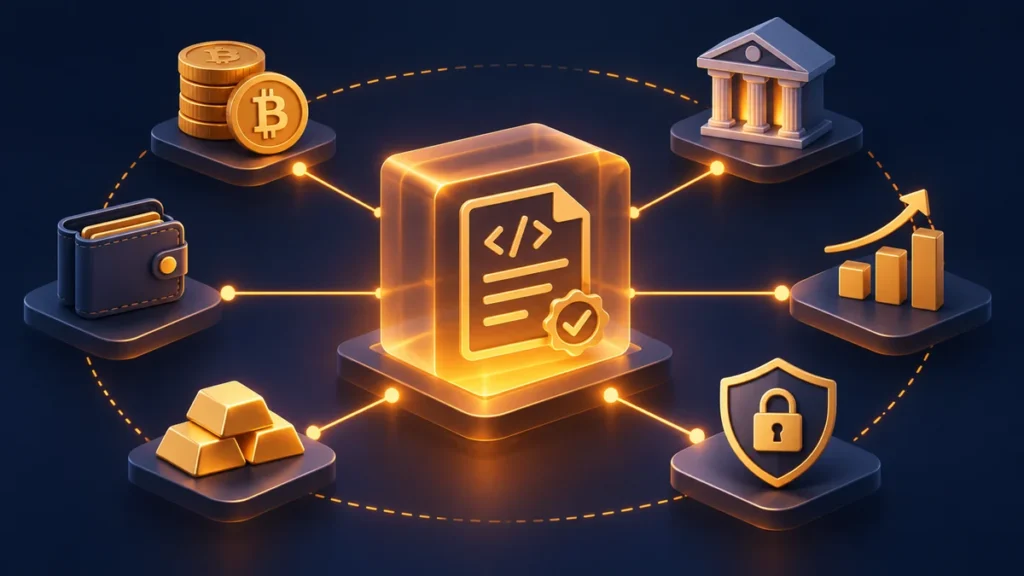
A DeFi interaction can involve several components behind one screen. There may be a wallet to authorize actions, a contract that changes balances, a source that provides price information and a token that moves under its own rules. Before trying a service, trace the specific operation and the parties or systems it relies on.
What is DeFi and how does an action work?
A smart contract is code that a blockchain can execute according to its rules. In DeFi, a contract can take an authorized request and update balances or other records if its conditions are satisfied. The written terms and the transaction prompt help a reader understand what the requested action would do.
Consider a simple swap. The user reads a quote, confirms the asset pair and authorizes the requested action. A separate approval may let a contract spend a token on the user’s behalf up to the terms in the authorization. The swap and the approval have different effects. Read both prompts before signing.
A web interface may be operated by a team even if the contract is accessible through the network. A decision about the interface’s trustworthiness and a decision about contract behavior are both necessary if you plan to use that interface. Find the independently documented contract and verify that the site presents actions involving it.
DeFi lending and collateral
In DeFi lending, a borrower may provide collateral to support an obligation. The protocol specifies which assets count, how their value is measured and what happens when the collateral position falls short of its rules. The terms also determine how borrowed funds or any fees must be repaid.
Imagine someone deposits a volatile asset and borrows a token against it. The borrower needs to know what happens if the collateral declines, what reference price is used and when an automated liquidation can occur. Merely intending to maintain the position does not override rules that evaluate it by current conditions.
Someone supplying assets to a lending application has another set of questions. What generates the quoted interest? When can supplied assets be withdrawn? Which borrowers, collateral and contracts support the arrangement? Compare conditions during normal use with any documented conditions for delays or limited liquidity.
Decentralized exchanges and the cost of execution
A decentralized exchange gives users a way to trade through network contracts. Depending on the design, the quote may rely on liquidity in a pool or another mechanism for matching a trade. Check the expected output, fees and what happens if the available price changes before the transaction is completed.
Slippage describes a difference between an expected execution price and the one received. A setting that permits a large difference can leave a user exposed to an outcome far from the initial quote. A setting that permits a small difference can cause a trade to fail if available prices move. The precise behavior depends on the terms presented.
Make sure the quote identifies the right token and network. A similar symbol can appear in several places, and a token sent over a route the recipient does not support can be difficult to recover. A central part of using the service is establishing exactly which assets the transaction will touch.
Stablecoins and yield farming
A stablecoin is designed to track a reference value. It can serve as a unit for quoting a swap or a possible asset to supply or borrow. The reference does not tell you how redemption works, who controls the token or whether sufficient liquidity is available at the desired price.
Yield farming generally refers to using protocols to pursue rewards. Follow where the reward comes from. A quoted return may involve interest, trading fees or an incentive token, and each can change for different reasons. Ask what assets must stay committed, what exit involves and how the reward would be converted into usable funds.
Putting applications together can create dependencies. A position in one contract can depend on a token issued through another or on prices supplied by a third system. Look at these relationships before treating the reported yield as a stand-alone measure. A position can have exposure to several design choices at once.
Smart-contract and permission risk
Code can contain defects, rely on external information or change through administrator powers. An audit can cover some issues in a specific version. Read its scope and findings, then look for later upgrades and dependencies. A project’s timeline of changes can matter more than the presence of a badge.
Permissions also deserve ongoing attention. A user may sign an approval to complete one activity and leave that permission active afterwards. Write down what was approved, which contract received it and how your wallet presents any remaining permissions. Verify the destination before changing or removing approvals as well.
A cautious walkthrough before signing
Start with a single task and describe the result you expect. Find the application through independently checked documentation, check that your wallet is on the correct network, and verify which addresses and amounts are involved. Review the network and application fees for the action.
Then read the authorization as if you were explaining it to someone else. Identify the recipient or spender, the asset, the amount and any conditions. If the app asks for a broader permission than your task seems to require, find a documented explanation before deciding whether to proceed.
Finally, check what an exit looks like. You may need to swap back, repay a loan or wait until funds are available under the application’s rules. Compare the exit conditions with what you assumed at the start. A clear entry process can coexist with a complicated exit.
| Question | DeFi application | Centralized service |
|---|---|---|
| How is the request handled? | A wallet transaction invokes contract rules | The provider executes activity under account terms |
| Who may affect control? | Key holders, contract operators or governance | Provider and authorized account holders |
| Where are the terms? | Contract, documentation and wallet prompts | Account agreement and service documentation |
| What can go wrong? | Code, price inputs, permissions or liquidity | Custody, account access or provider operation |
What This Means for Readers
Write down the action, maximum funds involved and authorization before signing. Review the service’s custody model and the path to undo or unwind a position where possible. If you cannot determine how a promised reward is paid or how to leave, that missing information belongs in the decision itself.
Related reading
- MIT Brothers Ethereum Case: Judge Clears Brothers
- World Bank Stablecoin Payments: Circle and Citi Join
Frequently Asked Questions
Is DeFi safe?
Safety depends on the specific contracts, permissions, liquidity and custody arrangement. An application can function as described while still exposing its users to losses through price changes or a bad authorization. Read the terms and identify the systems your transaction relies on before treating DeFi as a single risk category.
What is the difference between DeFi and CeFi?
DeFi generally uses blockchain contracts to carry out actions that a wallet authorizes. Centralized finance generally depends on a provider handling activity under its own account terms. Real services can involve elements of both. Check who holds funds, enforces conditions and can change the rules for the service you intend to use.
Can I be liquidated on a DeFi loan?
A lending protocol may enforce conditions on collateral and use liquidation when a position breaches those terms. Check the assets, price reference and thresholds defined by the system. Before borrowing, understand how a change in collateral value could affect the position and what options are available if that happens.
Does an audit remove smart-contract risk?
An audit offers information about the code and questions that were within its scope. It does not establish that all connected assets, upgrades and permissions are safe. Compare the audit’s version with the code in use and read the status of its findings before drawing conclusions about the specific application.
Why do I see a separate token approval?
Some contract interactions use a permission that lets a spender move a particular token under specified terms. That permission can be distinct from the action that uses it. Check the requested allowance, spender and asset in your wallet, and understand whether the permission remains available after the action is completed.
Where does yield come from?
A reward can be supported by interest, fees or an incentive supplied under the protocol’s rules. The source matters because each has different conditions for changing or ending. Look at what asset the reward is paid in, what costs are involved and how you could withdraw the position.